


 English
 Español
 русский
 Deutsch
 عربى
عربى
How to Choose a Lightweight Hiking Tent: A Complete Buying Guide with Practical Specs
Content
A buyer once showed us two lightweight hiking tents with the same floor space. One weighed 1.6 kg and the other 2.4 kg. Both had a rain fly and two doors. One cost 35 percent more. Our answer to the buyer was simple: the cheaper tent would feel fine in a park, but it would punish anyone carrying it uphill for six hours. Lightweight hiking tents are not just about the number on the scale. They are about what that number does to a real walking day.
Fabric and Weight: The Two Numbers That Matter Most
Most lightweight hiking tents sold today use one of three fabrics: 20D silnylon, 20D ripstop nylon, or polyester with a 170T PA coating. Each has a different effect on weight and durability.
A 20D silnylon fabric has a silicone coating that helps it resist water and pack small. A two-person tent made from it typically lands between 1.4 kg and 1.8 kg. A 20D ripstop nylon fabric uses a crisscross grid of tougher threads. That grid helps slow small tears from spreading, which matters when the tent gets scraped against rocks or pine branches. Both are strong options for long-distance hiking.
Polyester with a 170T PA coating is a common economy choice. It is fine for weekend camping, but the pack weight comes closer to 2.5 kg for the same two-person footprint. That extra kilogram feels like a heavy jacket in the backpack. Over a 20 km day, a 0.5 kg difference is already noticeable on the shoulders. A 1 kg difference is a real change in how the trip feels.
Some brands compare these fabrics with DCF, a stronger and more expensive material. DCF is lighter and resists water absorption well, but it costs several times as much and loses some strength in the folds. Most mid-range lightweight tents are made from 20D silnylon or ripstop because the balance works well for more customers.
Here is a quick comparison that helps our customers understand what they are choosing:
| Fabric | Typical Weight (2-Person) | Water Resistance | Recommended Use |
|---|---|---|---|
| 20D Silnylon | 1.4–1.8 kg | Good, with taped seams | Long-distance hiking, alpine trips |
| 20D Ripstop Nylon | 1.5–1.9 kg | Good, with silicone coating | Rugged terrain, high packing frequency |
| 170T Polyester + PA | 2.5 kg+ | Fair to moderate | Weekend camping, mild weather |
| DCF | 0.7–1.2 kg | Very good, but expensive | Serious ultralight enthusiasts |
For a retailer stocking a lightweight model with broad appeal, a 20D silnylon tent is a sensible recommendation. It keeps the weight down without making the fabric fragile. Our lightweight 1-2 person 20D silnylon hiking tent is built with that approach in mind.
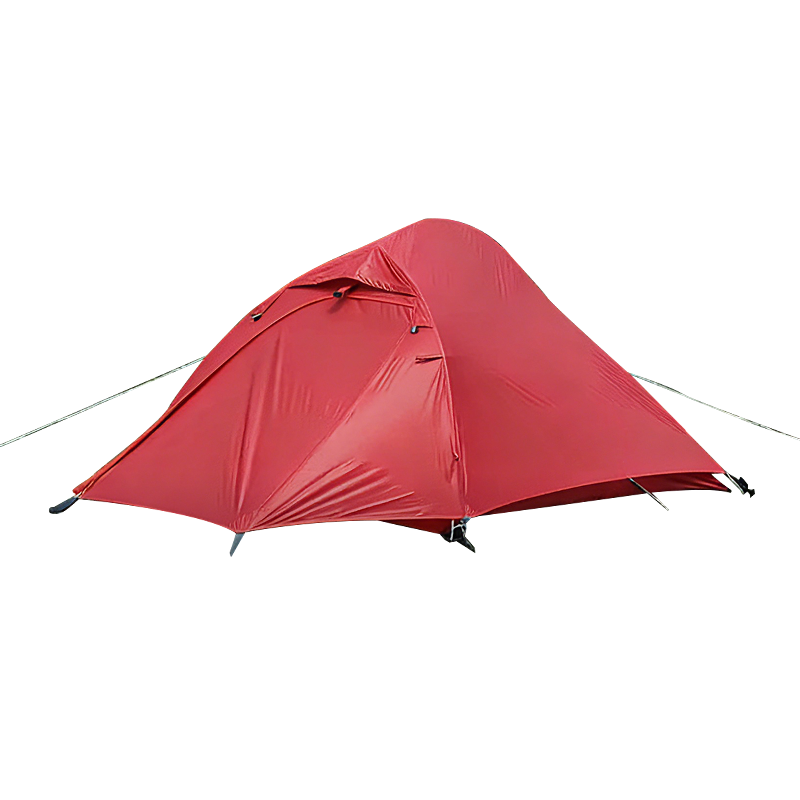 Lightweight 1–2 Person 20D Silnylon Hiking Tent with Waterproof CoatingThis tent uses 20D ripstop nylon with silicone and PU3000MM waterproofing, available in single or double sizes. Its 7001 aluminum poles and B3 mesh inner tent balance weight, condensation control, and durability for backpacking.View Product →
Single Wall vs Double Wall: How Condensation Changes the Night
Once the weight is settled, the next question is wall construction. A single wall tent uses one layer of fabric as both the roof and the wall. It is light by definition, but condensation can collect inside when the outdoor air cools and the hiker's body gives off moisture. That water can drip onto a sleeping bag during a cold night.
A double wall tent has an inner mesh or nylon room and an outer rain fly. The small gap between the two layers lets moisture escape. The mesh also helps keep mosquitoes out. The cost is a bit more weight, usually 150 to 250 grams depending on the design.
Our production experience tells us that first-time hikers often underestimate condensation. A single wall tent may be attractive on a trail gear spreadsheet, but the first trip into cool mountain air changes the decision. Buyers serving general backpackers should lean toward a double wall design when the use case allows.
Our single person lightweight double layer hiking tent is a good example. It keeps the total weight near 1.0 kg while giving the user a separate inner room and a fly. The result is a product that works for hikers who want to save weight without giving up condensation control.
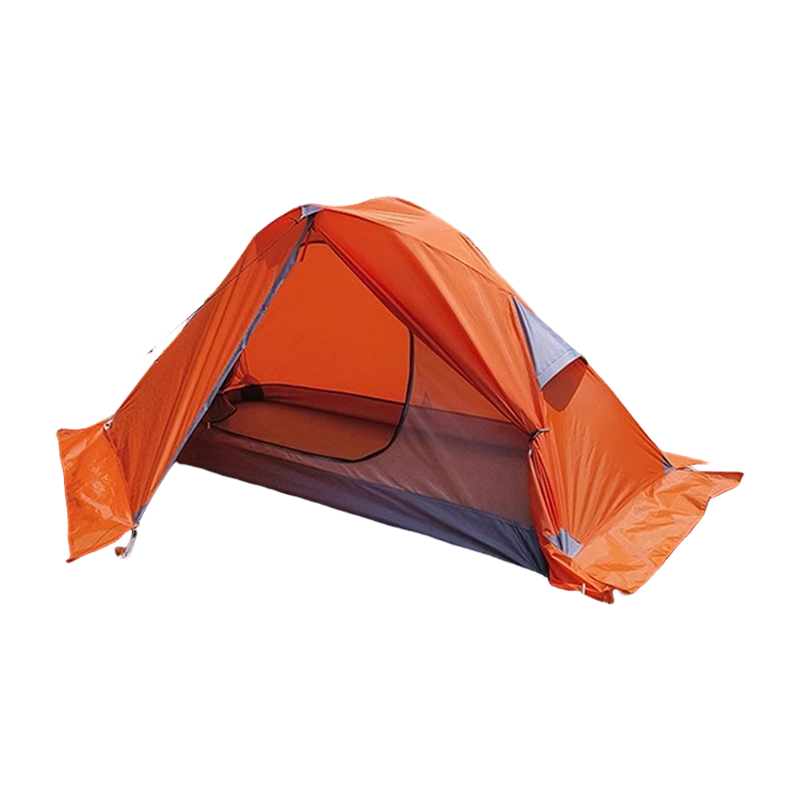 Single-Person Double-Layer Hiking Tent with Mesh Inner and Aluminum PolesWeighing about 1.0 kg, this tent has a separate fly and inner room to reduce condensation. Its 210T polyester rainfly and 210D Oxford floor provide waterproof protection, while B3 mesh ensures breathability for solo hikers.View Product →
Size and Capacity: One Tent, Many Hikes
A lightweight hiking tent can be built for one person, two people, or a small group. The right size depends on who uses it and what they carry.
For a solo hiker, a 1-person tent under 1.2 kg offers a smaller pack volume. The hiker sleeps alone, sticks to a narrow footprint, and gets a good weight saving. For two partners, a 2-person tent with two doors is much more comfortable. Each person has one side of the fly and their own space. A 2–4 person model adds a little more floor area and can carry a small family or a group on a short trail.
One useful way to check whether a tent fits is to look at the floor dimensions. A 1-person tent about 90 cm wide works for a single sleeping pad. A 2-person tent is usually 110 to 140 cm wide. A model at 1.6m x 2.0m can fit two pads plus small gear. Tall hikers need a longer floor. Wide shoulders need a wider one. These details decide the sense of space more than the number of "person" in the label.
Our lightweight 1 person 20D ripstop hiking tent is designed for the solo hiker who watches every gram. At about 0.9 kg, it fits in a side pocket and sets up quickly. It is a popular choice among buyers who serve trekking and mountain clients.
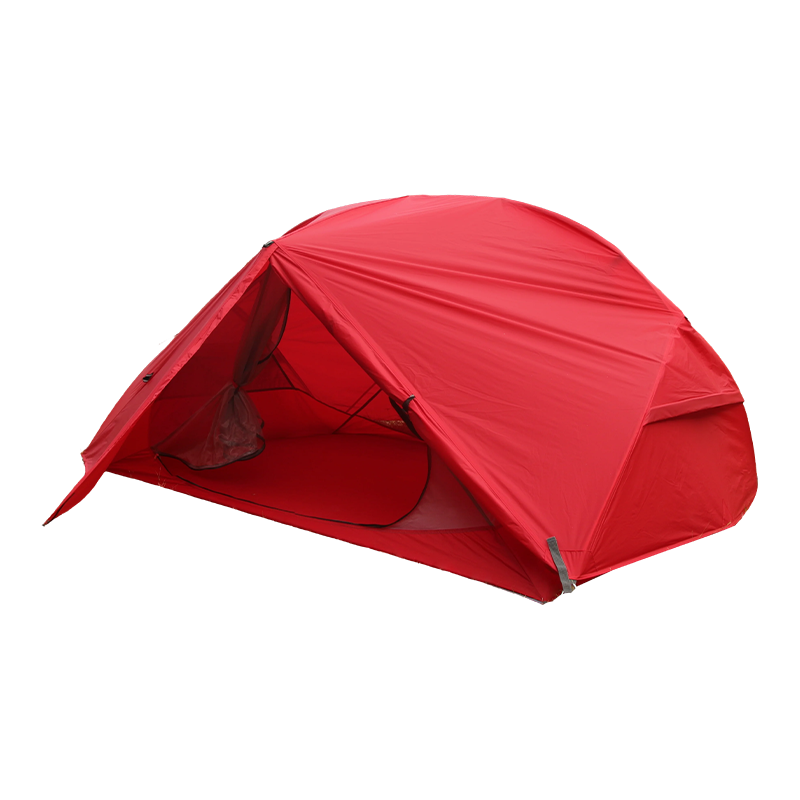 Ultralight 1-Person 20D Ripstop Hiking Tent for Solo TrekkersAt approximately 0.9 kg, this tent fits in a side pocket and sets up quickly. It combines 20D ripstop nylon, PU3000MM coatings, and 7001 aluminum poles to offer lightweight, moisture-resistant shelter for mountain trekking.View Product →
For a brand wanting one model to cover a broader market, a 2–4 person waterproof lightweight hiking tent is a more flexible pick. It can be sold as a solo tent, a couple's tent, or a small-group shelter without losing its hiking-first character.
Freestanding vs Trekking Pole Tents
Freestanding tents have their own pole set. You pitch them, pick them up, and move them to a better spot without taking them apart. They are easier to set up on hard pack and in cold weather when fingers are stiff. A freestanding lightweight tent can usually be pitched in about three to five minutes.
Trekking pole tents use hiking poles instead of dedicated poles. They save weight by taking the poles out of the backpack. But they need correct stake placement and a little learning curve. In loose sand or rocky ground, a trekking pole tent can be harder to secure. The setup time runs closer to five to ten minutes, depending on the user.
From a manufacturing side, freestanding tents cost more in raw materials and assembly. The pole joints, clips, and guy points add complexity. From a retail side, freestanding tents are often easier to sell because customers are more comfortable with them.
If the target segment is casual hikers and family campers, freestanding is generally the safer recommendation. If the target is near-ultralight enthusiasts who know the tradeoff, a pole tent can fill a niche. This is also the point where we talk about total packaged size. A single wall pole tent can pack down to about 15 cm x 35 cm. A comparable double wall freestanding tent will run closer to 20 cm x 40 cm.
Procurement Checks: Before You Place the Order
Lightweight hiking tents are not difficult to make, but they are difficult to make consistently. The fabric, coating, and seam finish must match the specification on every batch. If a factory changes the denier from 20D to 15D without telling you, the tent becomes lighter but also more fragile. That hidden change reaches your customer with little warning.
The three checks we run on every production run are seam tape, pole quality, and stitching density. Seam tape should seal every seam that carries the rain load. Poles should withstand repeated stress without bending at the joint. Stitches per inch affect tear strength and water resistance. A low stitch count may look clean, but it can fail when the wind picks up.
Waterproofness is another measurable point. A well-made lightweight hiking tent should show a hydrostatic head between 1000 mm and 2000 mm on the floor, and 1500 mm to 3000 mm on the fly. Buyers can ask for test reports before confirming an order. Wind resistance is harder to prove on paper, but the shape of the fly and the strength of the guy points tell a lot.
We also look at how the tent is packed. The carry bag should fit the tent and poles without squeezing the fabric too much. The weight printed on the box should match the weight on the scale. Small differences of 50 grams may not matter at home, but they do matter to a hiker who packs everything on their back. Real hikers notice the difference, and a common source of surprising weight is the carry bag and the pole set.
If you want to see where the market is heading, a useful resource is a list of the actual questions buyers are asking in the current season. We publish an industry insight that covers the key questions buyers are asking in 2026. It covers trends in fabric, ventilation, and market demand.
Final Decision Framework
Start with the customer's use case. If the goal is a low pack weight, a single wall 20D silnylon or ripstop tent is a good direction. If the goal is comfort in changing weather, a double wall design with a mesh inner room and a low-profile fly is a safer choice. If the retailer serves a mix of first-timers and experienced hikers, a freestanding two-door model in a 1–2 person size is a strong middle ground.
Then check the details. Seam tape, pole joint strength, zippers, guy points, and packed size will determine whether the tent lasts three seasons or ten. Weight is the headline, but quality is the story.
For a first order, consider running a small trial of two or three lightweight models side by side. Put them on a scale, leave them in the rain, and let the field do the talking. That test will tell you more than any brochure.
-
25 Sep, 2026
Two in the morning. The tent walls are beaded with moisture, the sleeping bag feels damp, and the air inside is stale. This is a familiar scenario for campers ...READ MORE
-
18 Sep, 2026
You unzip the tent, and the smell hits you first: damp earth, condensation, and the faint sour note of a storm that passed two nights ago. A tent that has been...READ MORE
-
11 Sep, 2026
At a Saturday farmers market, two coffee stalls stand forty meters apart. One operates under a plain grey canopy. The other has its name, its brand colors and ...READ MORE
-
03 Sep, 2026
Two beach tents can look identical in a supplier's catalog and still behave nothing alike after three weekends on a windy shoreline. The cheaper one sags becau...READ MORE
-
02 Oct, 2026
A four-season tent is a specific piece of equipment, not a marketing upgrade. What keeps a shelter standing on an exposed ridge is not the label on the stuff s...READ MORE
-
02 Apr, 2026
Understanding Your Family’s Camping Needs Choosing the right camping tent starts with a clear understanding of your family’s actual needs. Many buyers make the ...READ MORE

-
+86-15867893553
- km@kaima-outdoor.com
- 6th Floor, Building 8, Wanyang Innovation City, Baifeng Street, Beilun District, Ningbo City, Zhejiang Province, China.
Copyright © Ningbo Kaima Outdoor Products Co., Ltd.All Rights Reserved.
 Custom Outdoor Lightweight/Packable Tent Manufacturers
