


 English
 Español
 русский
 Deutsch
 عربى

fully automatic tent: Applications, Selection Criteria, and Practical Guidance
Content
A fully automatic tent looks like a small promise: arrive, unzip the bag, and let the frame do the work. For buyers, that promise carries more weight. Campers remember a tent that fights back, and they remember one that opens smoothly in wind or rain. We have spent more than twenty years building hiking, camping and leisure tents in Ningbo, close to the port, and we have learned that “automatic” is less about magic than about thoughtful frame design, honest materials and repeatable factory quality.
Why Fully Automatic Tents Are Winning Casual Campers
Weekend camping has changed. Campers often arrive late, tire quickly and want shelter before the weather changes. Rental fleets, family day trips, festival sites and first-time campers all want shelter without a long instruction session. Setup time is now part of the product, not an afterthought. That shift is one reason fully automatic tents are gaining ground among casual outdoor users. The best designs open with a clear, predictable motion; the worst ones demand strength, patience and a second person. For a brand, the useful question is not simply “Is it automatic?” but “Can a tired parent open it in the rain without reading a manual?”
What “Automatic” Really Means
In the trade, “automatic” describes several mechanisms. Some tents use pre-assembled fiberglass poles that unfold from a hub. Others rely on steel wire loops, aluminum poles, or pop-up frames. These systems differ in weight, packed size, opening force, wind stability and repairability. A buyer should ask for pole diameter, hinge construction, replacement parts and a live opening test, not just a label on the carton.
| Frame system | Opening feel | Typical fit | Buyer check |
|---|---|---|---|
| Pre-assembled fiberglass | Light and familiar | Family and entry-level camping | Pole diameter, rivets, spare pole sections |
| Steel wire | Springy and compact | Pop-up beach and festival | Wire memory and rust protection |
| Aluminum pole | Firm and repairable | Premium weekend and touring | Wall thickness and alloy grade |
| Hub or pop-up | Very fast | Casual and rental | Hub tolerance and fabric tension |
Where Automatic Designs Fit in Your Range
A four-person automatic tent is often the sweet spot for a first order. It suits family weekends, rental use and promotional programs, yet it can still be packed and carried by one person. Aluminum poles usually cost more than fiberglass, but they resist fatigue, can be repaired, and give a firmer feel in wind.
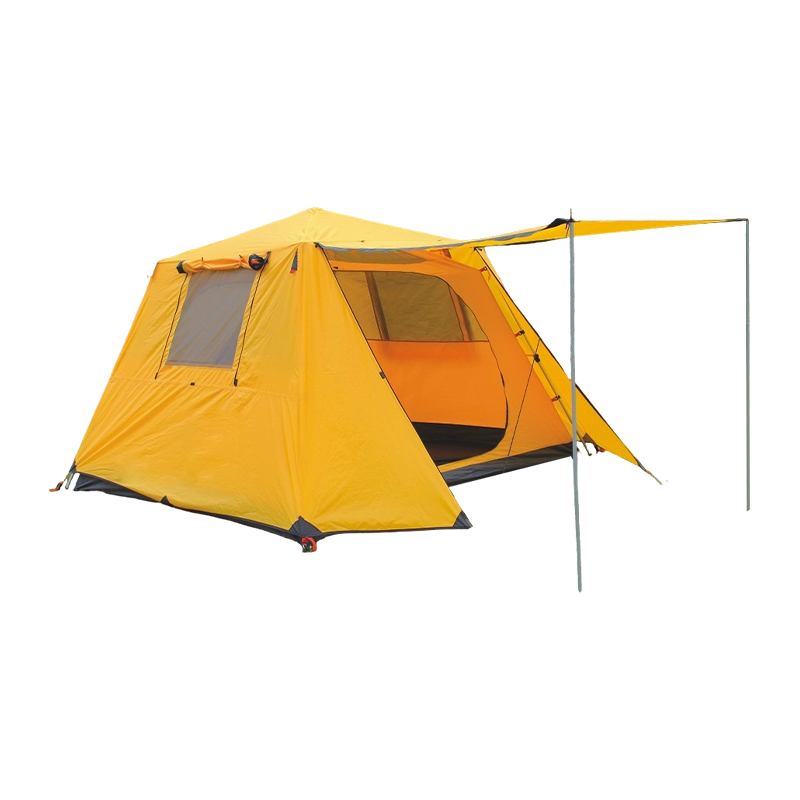 4-Person Automatic Tent with Aluminum Alloy PolesThis four-person automatic tent pairs quick-opening aluminum alloy poles with PU2000 polyester and an Oxford floor, useful for comparing frame durability and family capacity.View Product →
For entry price points, a well-made fiberglass frame can be the smarter commercial choice. For coastal markets, check coating and hardware for salt exposure. The aim is not to sell the most complex mechanism; it is to match the opening system to the camper, the climate and the price shelf. A clear product page should state these tradeoffs before a buyer ever requests a quote.
Comfort, Ventilation and Weather Protection
Fast setup is only the first five minutes. The next twelve hours depend on airflow, condensation control and rain protection. Mesh windows help in warm, humid conditions, but they need internal covers or careful seam placement when rain comes. A double-layer design adds weight and cost, yet it gives buyers a clearer story about comfort and weather protection.
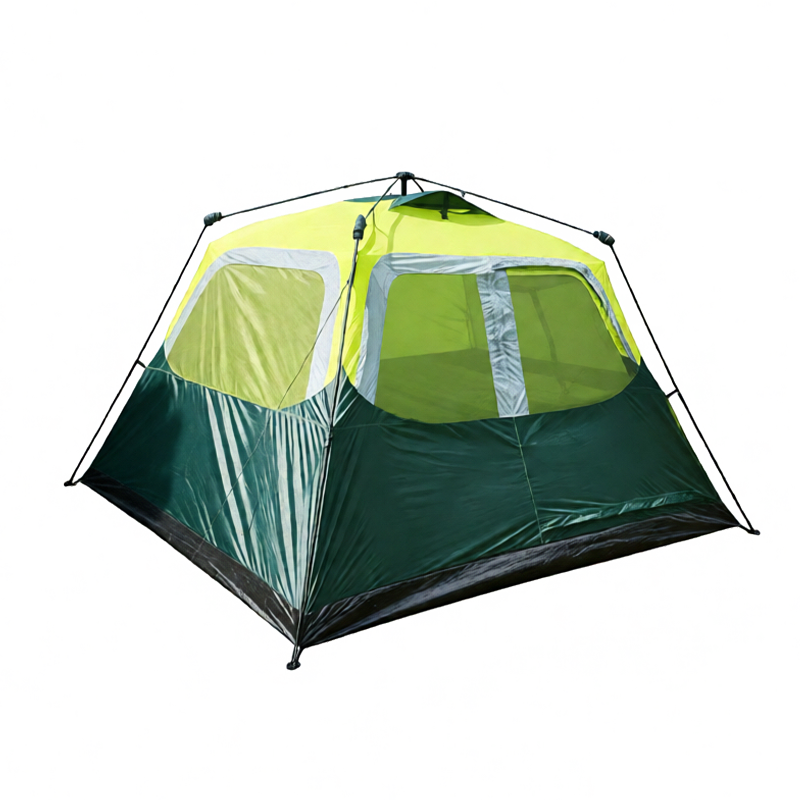 4–8 Person Automatic Camping Tent with Mesh WindowsAvailable in 4-, 6- and 8-person sizes, this automatic tent combines B3 mesh windows with PU1500 Oxford fabric for comparing ventilation and group capacity.View Product →
Ask for fabric composition, hydrostatic head data, seam sealing details and zipper quality. A fully automatic tent can be quick to open and still fail the morning after if ventilation is poor or the fly touches the inner tent. That is why we prefer to discuss ventilation and rain protection together, not as separate selling points.
Quality Control and Sampling
Sampling is where a good concept becomes a dependable order. Open and close a sample at least twenty times. Check pole joints, fabric pull, stitching, zipper movement and packed size. We use a full-process monitoring system from incoming fabric to final carton, test waterproof and wind performance against agreed standards, and feed findings back into design. You can read more about our factory and production process.
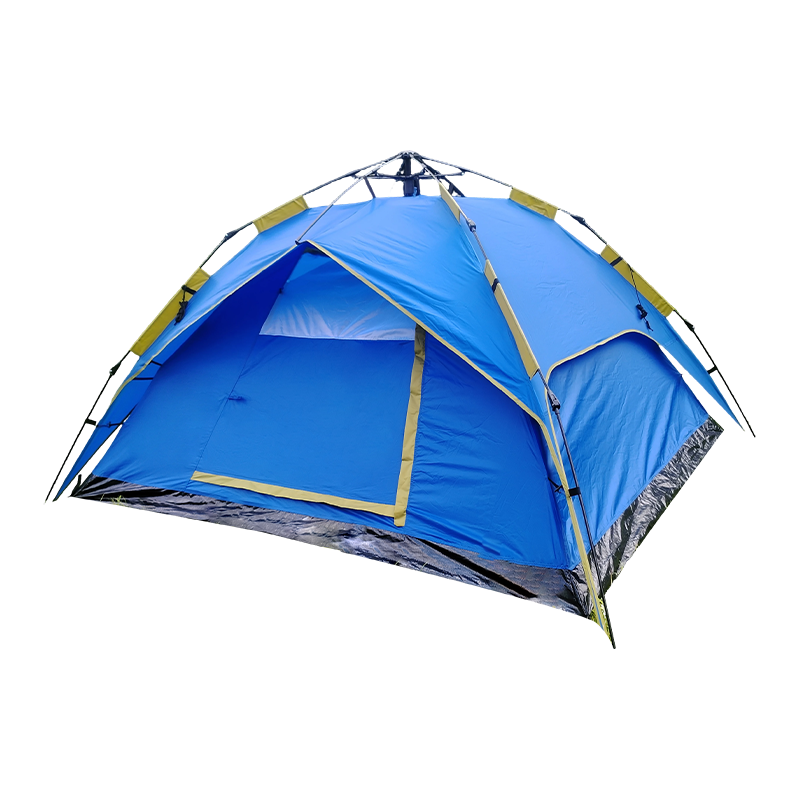 Double-Layer Automatic Pop-Up Camping TentThis double-layer pop-up tent uses PU2000 polyester and automatic fiberglass spring poles for quick setup, useful for assessing condensation control and packed size.View Product →
A double-layer pop-up tent is a useful sample because it shows whether the supplier can combine a fast frame with an inner tent, ventilation and a clean packed result. Small details, such as pole tips and bag stitching, tell you a lot about the production floor.
Ordering Checklist for B2B Buyers
Keep the first quotation conversation practical:
- Confirm the opening mechanism and ask for a video or live sample.
- Specify fabric, coating, colorfastness and UV requirements.
- Check pole material, diameter, wall thickness and spare-part availability.
- Review packed dimensions, carry bag style and carton drop-test needs.
- Ask for waterproof, wind and durability test reports, not only verbal claims.
- Plan labels, manuals, replacement parts and after-sales support.
A clear checklist reduces surprises later. It also helps the factory quote accurately, especially when packaging or branding is part of the brief.
Common Buyer Mistakes to Avoid
One common mistake is treating “automatic” as a single quality grade. A fast-opening tent can still have weak pole joints, poor seam sealing or a carry bag that fails in transit. Another is ordering from a photo alone. Ask for a sample, open it in wind, check the packed length against your market's expectations, and confirm spare parts before the purchase order. Finally, do not separate the tent from its instructions. Clear pictograms and a short setup card often reduce support requests more than an extra feature.
A Calm, Confident Choice
The right fully automatic tent should feel simple to the camper and predictable to the buyer. When the frame, fabric, ventilation and quality process agree with each other, the tent earns its place in the range. That is the standard we build toward: practical, affordable and ready for the first trip, not only the showroom.
-
16 Jul, 2026
Family camping trips, weekend getaways, and outdoor festivals have long been cherished traditions for people seeking to disconnect from daily routines and reco...READ MORE
-
16 Oct, 2026
Choosing a tent looks simple until you are standing in front of thirty of them. Two-person or four-person, pop-up or pole, silnylon or polyester. After more th...READ MORE
-
25 Sep, 2026
Two in the morning. The tent walls are beaded with moisture, the sleeping bag feels damp, and the air inside is stale. This is a familiar scenario for campers ...READ MORE
-
02 Jul, 2026
A day at the beach should be about relaxation, not worrying about sunburn or overheating. A high UPF portable sun-safe beach tent gives families, sunbathers, ...READ MORE
-
23 Oct, 2026
Every tent we design starts with the same question: how will air get in, and how will it get out? Ventilation is the quiet feature that decides whether you wak...READ MORE
-
09 Oct, 2026
Rain is the fairest test a tent will ever face. It finds the thin coating, the seam nobody taped properly, the floor that sits too low, and the ventilation tha...READ MORE


-
+86-15867893553
- [email protected]
- 6th Floor, Building 8, Wanyang Innovation City, Baifeng Street, Beilun District, Ningbo City, Zhejiang Province, China.
Copyright © Ningbo Kaima Outdoor Products Co., Ltd.All Rights Reserved.
 Custom Outdoor Lightweight/Packable Tent Manufacturers
