


 English
 Español
 русский
 Deutsch
 عربى

Tent Ventilation: How to Keep Your Tent Fresh, Dry and Comfortable Inside
Content
- 1 Why Tent Ventilation Matters More Than Most Campers Expect
- 2 How Air Actually Moves Through a Tent
- 3 Ventilation Features Worth Comparing
- 4 Matching Ventilation to the Way You Camp
- 5 Common Ventilation Mistakes and Simple Fixes
- 6 What We Check Before a Tent Leaves the Workshop
- 7 Small Details, Better Nights
Every tent we design starts with the same question: how will air get in, and how will it get out? Ventilation is the quiet feature that decides whether you wake up comfortable or peel a damp sleeping bag off yourself at dawn. After more than two decades of building hiking, camping and beach tents, we have learned that good airflow rarely comes from one big opening. It comes from several small details working together.
This guide explains what ventilation actually does inside a tent, which features are worth comparing on a spec sheet, and how to match airflow to the way you camp.
Why Tent Ventilation Matters More Than Most Campers Expect
A sleeping adult releases roughly a litre of moisture overnight through breathing and perspiration. In a sealed tent, it condenses on the coolest surface it can find, usually the inner face of the flysheet or the ceiling. By morning the walls are dripping and your sleeping bag feels cold and clammy, even though it never rained.
Ventilation handles that problem and several others at once:
- Condensation control: steady air exchange carries humid air outside before it settles on cold fabric.
- Temperature comfort: warm air escaping through a high vent keeps a summer night bearable and a packed family tent from feeling stuffy.
- Air quality: carbon dioxide builds up quickly in a closed space, especially with two or three people inside.
- Odours and fumes: a cross-breeze clears food smells and cooking fumes.
- Mould prevention: fabric that dries out during the day lasts far longer across a season.
None of this requires a gale blowing through your tent. It requires a path: an entry point for fresh air, a route through the interior, and an exit near the top.
How Air Actually Moves Through a Tent
Warm, moist air is lighter than cool, dry air. Inside a closed canopy it rises to the highest point, so an opening at the apex lets it escape while cooler air is drawn in through lower openings. This is the stack effect, the main engine of tent ventilation.
The second engine is cross-flow: two openings at similar height on opposite walls. Even a gentle breeze creates enough pressure difference to push air through a mesh panel on one side and out through a door or window on the other.
The third element is the gap between layers. In a double-layer tent, the inner body is usually mesh or breathable fabric, with the flysheet several centimetres away. Vapour passes through the inner wall, drifts through that gap and leaves through vents in the fly. Single-layer models can ventilate well too, but they depend more on mesh panels and large adjustable openings, because the fabric itself has to manage vapour.
Ventilation Features Worth Comparing
When you compare tents or supplier samples, judge each feature on its own rather than the canopy as a whole. The table below summarises the main ones and what each is for.
| Feature | How it works | Best suited to |
|---|---|---|
| Mesh inner body | Lets vapour pass through and keeps air moving between inner and fly | Three-season camping, warm nights |
| Apex or ridge vent | Releases warm, moist air where it naturally collects | Double-layer tents, still nights |
| Low-level or ground vents | Draw in cooler, drier air to complete the airflow loop | Summer camping, humid climates |
| Windows and mesh panels | Create a cross-breeze through the living area | Hot weather, family camping |
| Two-way door zippers | Allow a narrow gap at the top or bottom for fine tuning | Any tent, changing conditions |
| Breathable single-layer fabric | Moves vapour through the wall itself, with vents supporting it | Lightweight hiking, mild weather |
Matching Ventilation to the Way You Camp
Family and Base Camping
More people means more moisture and body heat. A family of four can put two or three litres of water into the air of one tent in a night, so interior volume matters as much as vent count. Look for a double-layer structure with a mesh inner, at least two opening walls, and a vent near the ridge. In warm regions, openings on all four sides keep the interior from turning into a greenhouse in the afternoon, while the fly can stay closed if the weather turns.
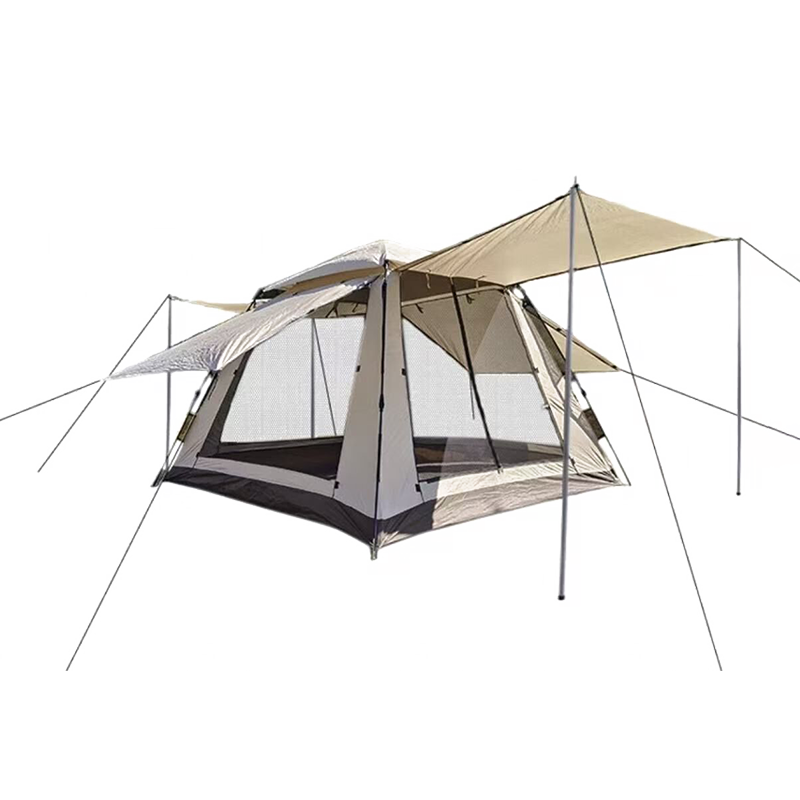 Four-Sided Window Automatic Pop-Up Camping TentA quick-pitch 210×210×160 cm tent with mesh windows on all four sides, 190T silver-coated polyester, fiberglass poles, and 150D Oxford floor for ventilated camping.View Product →
Hiking and Backpacking
On the trail, weight and ventilation pull against each other. A single-wall shelter saves grams but traps vapour, so it needs generous mesh and a high vent you can reach from inside your sleeping bag. Double-wall designs are more forgiving, particularly when the fly can be pitched slightly away from the inner tent at ground level. Fabric matters too: 20D siliconised nylon and ripstop keep the pack light while leaving room for mesh panels and adjustable vents. If you are weighing options, our range of lightweight hiking tents shows how those trade-offs play out across one- and two-person sizes.
Beach Days and Daytime Shade
Beach tents sit low, absorb direct sun and are often used for an hour or two at a time, so internal heat matters more than overnight condensation. Mesh windows, a rear vent and a raised front edge let hot air escape while you stay out of the glare. A single-layer design with breathable mesh panels is often the right answer, because it sheds heat quickly and packs down small.
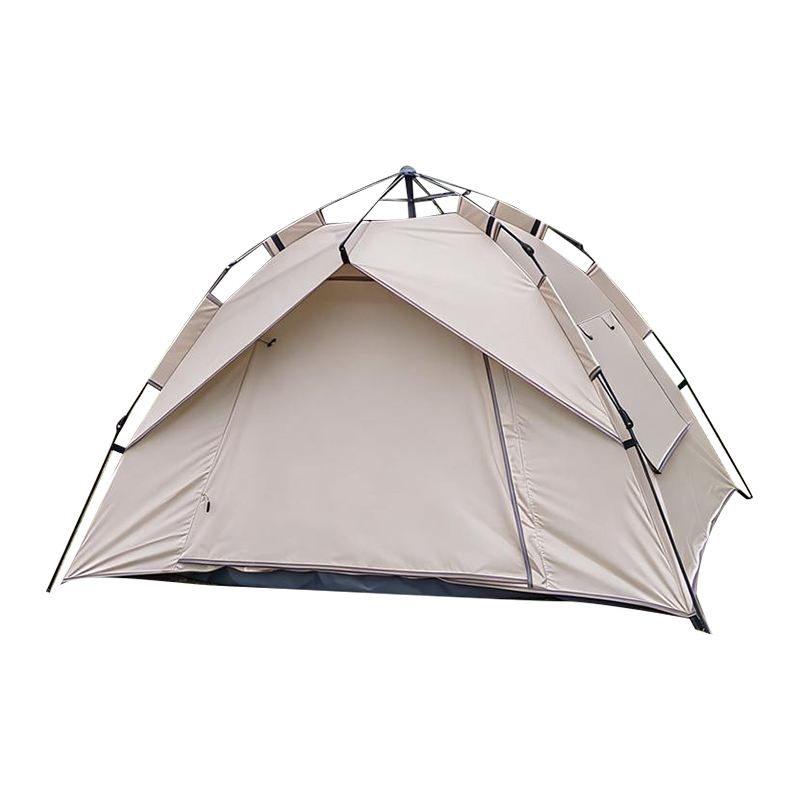 Single-Layer Automatic Beach and Park Camping TentCompact 205×150×125 cm pop-up tent with breathable mesh, PA silver-coated 190T fabric, and PE floor, suited to sunny beach and park outings.View Product →
Cold Nights and Shoulder-Season Trips
Ventilation still matters when the temperature drops; it just needs to be managed rather than thrown wide open. Keep the highest vent clear, close the low vents against the wind, and avoid piling gear against mesh walls, which blocks the very panels doing the work. A double-layer family tent gives you that flexibility, since the fly can stay sealed while the inner mesh and apex vent keep the air moving.
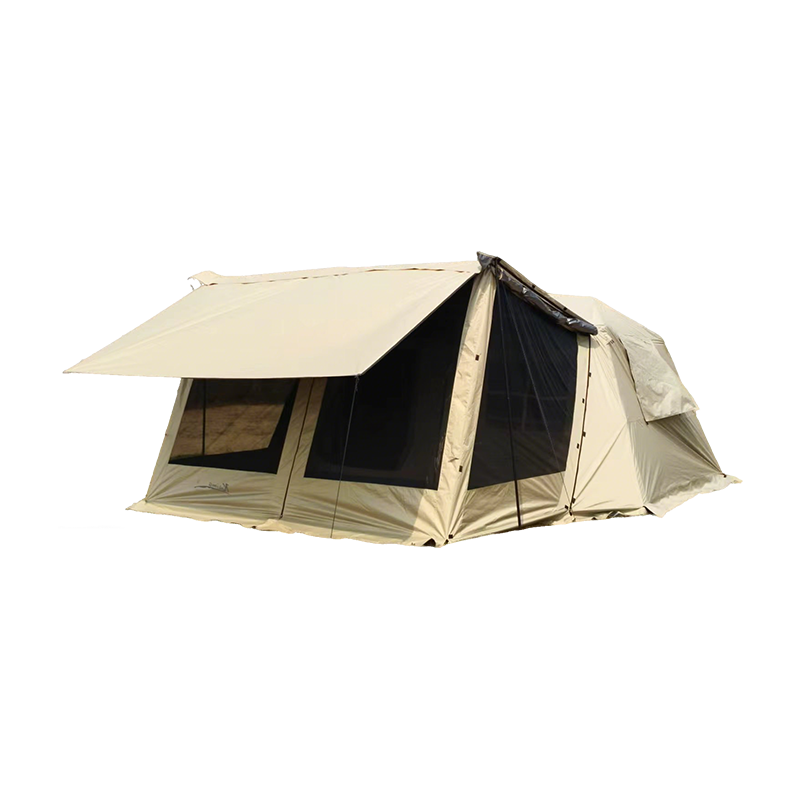
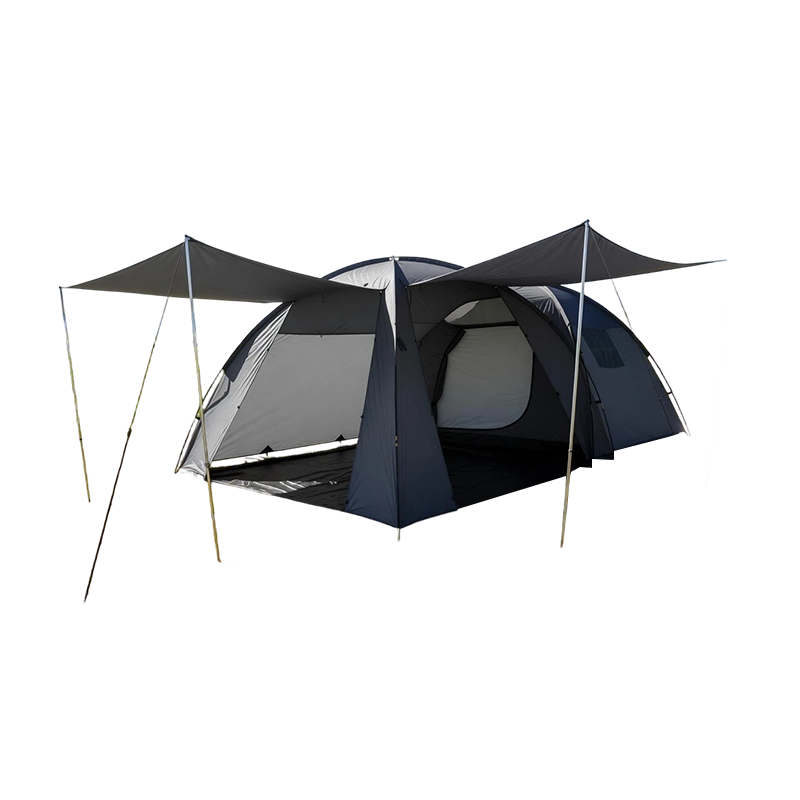 5–6 Person Double-Layer Family Camping Tent with Living SpaceA spacious 5–6 person one-room-one-hall tent with waterproof 210T outer, breathable inner, fiberglass poles, and PE groundsheet for family camping.View Product →
Common Ventilation Mistakes and Simple Fixes
The same handful of habits cause most of the damp mornings we hear about:
- Closing every vent to stay warm. Trapped moisture makes a sleeping bag feel colder; keep the highest vent open even on chilly nights.
- Pitching the fly tight to the ground. That blocks low-level intake. Leave a small gap, or use the ground vent if the tent has one.
- Ignoring wind direction. In calm weather, face low openings into the breeze; in strong wind, close the windward side and rely on the leeward apex vent.
- Cooking in a fully sealed tent. Even with vents open, use the vestibule rather than the sleeping area.
- Letting sand and dust clog the mesh. A soft brush and clean water restore airflow in minutes.
- Packing the tent away wet. Damp fabric stored for weeks is how mould starts, so dry it in the shade first.
What We Check Before a Tent Leaves the Workshop
Ventilation is easy to promise and harder to verify, especially across a large order where every unit must behave the same way. Each design is monitored from raw fabric to finished carton, and vent placement, mesh density and flysheet offset are checked against the approved sample rather than left to the operator's eye. Our test equipment measures waterproofness, wind resistance and durability, so decisions rest on data rather than impressions.
For custom orders, vent type, mesh specification, zipper configuration, fabric and colour can all be adjusted, and we would much rather settle airflow questions during sampling than discover a problem in the first container. To get more life out of the tent you already own, our tent cleaning and care guide covers drying, storage and refreshing mesh between trips.
Small Details, Better Nights
Good tent ventilation is not one clever feature. It is a mesh inner wall, a vent at the ridge, an opening you can reach at two in the morning, and a gap that lets air in without letting rain follow it. Get those details right and a tent stops being something you endure and becomes something you enjoy sleeping in.
If you are sourcing tents and want to talk through ventilation design for your market, we are glad to walk through samples, specifications and testing with you before you commit to a production run.
-
09 Oct, 2026
Rain is the fairest test a tent will ever face. It finds the thin coating, the seam nobody taped properly, the floor that sits too low, and the ventilation tha...READ MORE
-
16 Oct, 2026
Choosing a tent looks simple until you are standing in front of thirty of them. Two-person or four-person, pop-up or pole, silnylon or polyester. After more th...READ MORE
-
25 Sep, 2026
Two in the morning. The tent walls are beaded with moisture, the sleeping bag feels damp, and the air inside is stale. This is a familiar scenario for campers ...READ MORE
-
18 Sep, 2026
You unzip the tent, and the smell hits you first: damp earth, condensation, and the faint sour note of a storm that passed two nights ago. A tent that has been...READ MORE
-
11 Sep, 2026
At a Saturday farmers market, two coffee stalls stand forty meters apart. One operates under a plain grey canopy. The other has its name, its brand colors and ...READ MORE
-
02 Oct, 2026
A four-season tent is a specific piece of equipment, not a marketing upgrade. What keeps a shelter standing on an exposed ridge is not the label on the stuff s...READ MORE
-
+86-15867893553
- km@kaima-outdoor.com
- 6th Floor, Building 8, Wanyang Innovation City, Baifeng Street, Beilun District, Ningbo City, Zhejiang Province, China.
Copyright © Ningbo Kaima Outdoor Products Co., Ltd.All Rights Reserved.
 Custom Outdoor Lightweight/Packable Tent Manufacturers
