


 English
 Español
 русский
 Deutsch
 عربى

Dome Tent vs Cabin Tent: A Practical Shape Guide for Buyers and Campers
Content
At our sample room in Ningbo, the dome-versus-cabin question rarely begins with specifications. It begins with a picture of the trip: a couple pitching a small shelter on an exposed ridge, or a family unloading cots, chairs, and a cooking table beside a lake. Both tents can be excellent, but they solve different problems. That is the useful way to compare a dome tent and a cabin tent.
Two Shapes, Two Kinds of Comfort
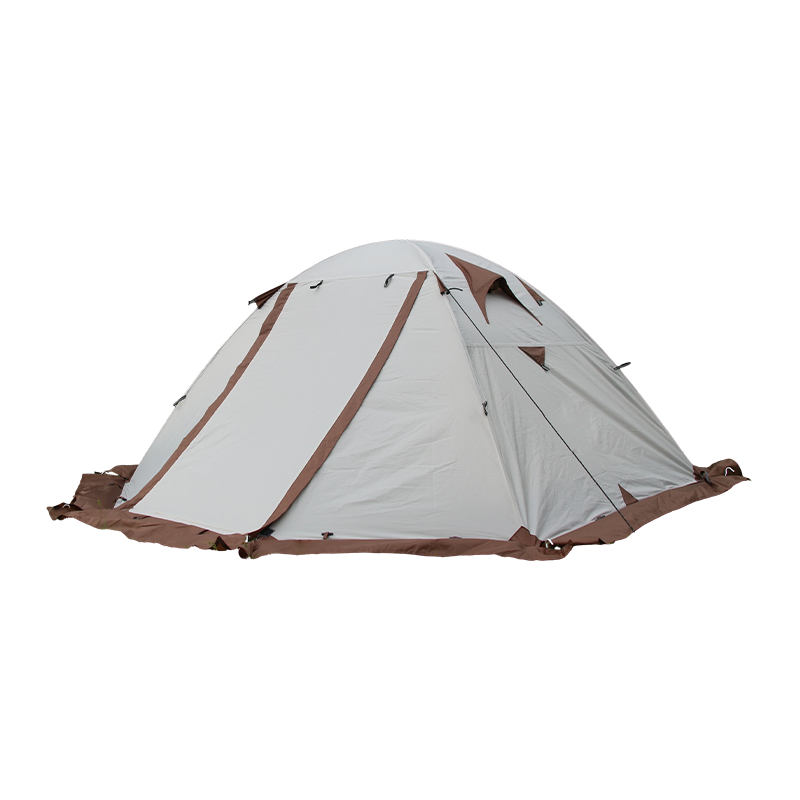
A dome tent is built around a rounded frame. Its roof reaches its highest point in the center and then slopes down toward the edges. That curved profile helps it deflect wind, shed rain, and stay compact when packed. Inside, the usable floor is often largest near the middle, while the side walls draw inward.
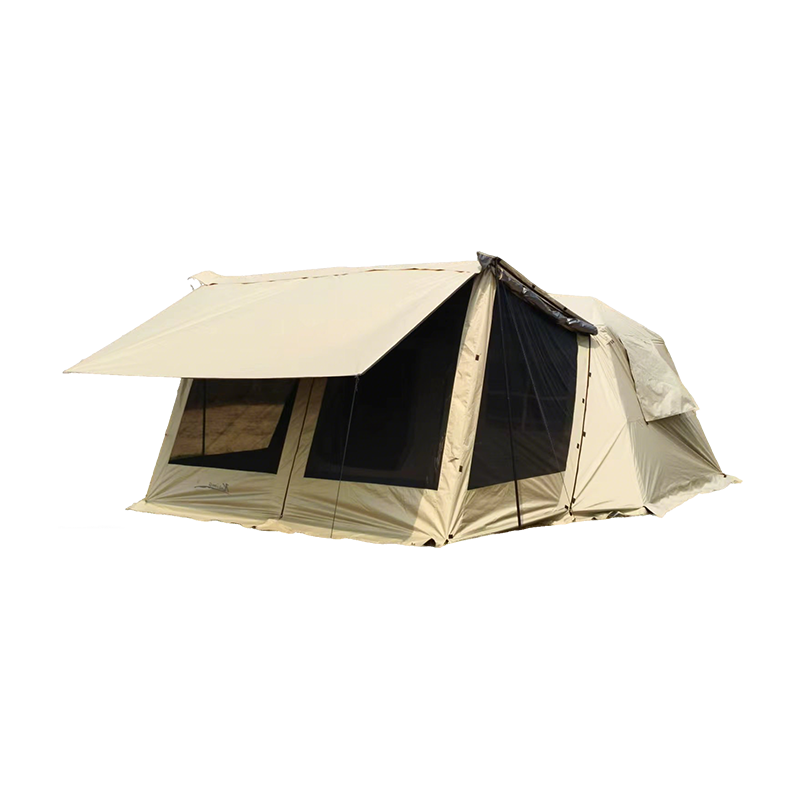
A cabin tent takes the opposite approach. Its walls rise more vertically, and its footprint is usually more rectangular. The result is a room-like interior with more usable volume near the edges, which makes it easier to line up sleeping pads, store bins, or stand up without crouching. The trade-off is fabric, frame weight, and a boxier profile that catches wind differently.
Dome Tent vs Cabin Tent at a Glance
| Feature | Dome Tent | Cabin Tent |
|---|---|---|
| Interior feel | Cozy, peaked in the center | Room-like, generous near the walls |
| Headroom | Best at the center | More consistent across the floor |
| Wind and rain | Rounded surfaces deflect weather well | Needs careful pitching and guying |
| Setup | Usually fewer poles and quicker | More frame parts and more time |
| Packed size and weight | Compact and easier to carry | Bulkier, better suited to vehicle-based trips |
| Best use | Backpacking, small camps, windy sites | Family camping, base camps, long stays |
Headroom and Interior Layout
Headroom is where the choice becomes personal. In a dome tent, the peak height may look impressive on paper, but the sloping walls mean the space near your sleeping mat is lower. For a solo hiker or a couple, that feels efficient and sheltered. For a family with children, it can mean bent heads and fewer places to put bags.
A cabin tent gives more of its height back to the camper. Vertical walls make the floor plan easier to use, especially with air mattresses, folding chairs, and storage boxes. If the camping style involves setting up a temporary home for several nights, that extra usable volume is often worth the larger pack size.
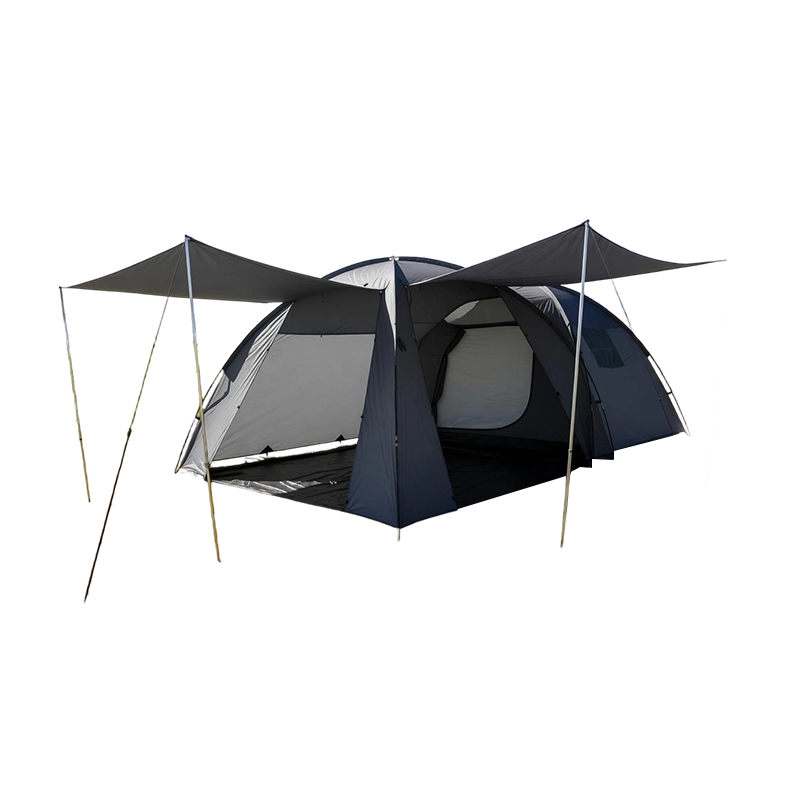 5–6 Person Double-Layer Family Camping TentSeparate sleeping and living zones plus double-layer waterproof construction make this practical for family base camps where usable space matters.View Product →
Weather, Wind, and Rain
Dome tents have a well-earned reputation in changeable weather. The curved roof encourages rain to slide away, and the rounded sides present less flat area to gusting wind. That does not make every dome tent storm-proof; pole diameter, seam sealing, waterproof coatings, guy lines, and pitch quality still matter.
Cabin tents can feel calmer and more spacious in fair weather, but their broad, vertical panels can catch wind. On exposed ground, a cabin tent needs a careful pitch, solid stakes, and often additional guying. Modern fabrics and stronger frames have narrowed the gap, but shape still influences how a tent behaves when the weather turns.
Setup, Weight, and Packing
Dome tents usually use fewer poles and a simpler sequence, which helps at the end of a long drive or a short daylight window. Cabin tents often have more frame parts and a larger footprint, so they take longer to pitch and require more room. Neither is difficult with practice, but the difference is real for one-night stops and campers who value a fast routine.
Weight and packed size follow the same logic. A dome tent is generally easier to carry, making it the natural choice for backpacking, motorcycle trips, and small campsites. Cabin tents are better treated as car-camping shelters: heavier, bulkier, and designed around the convenience of a vehicle nearby.
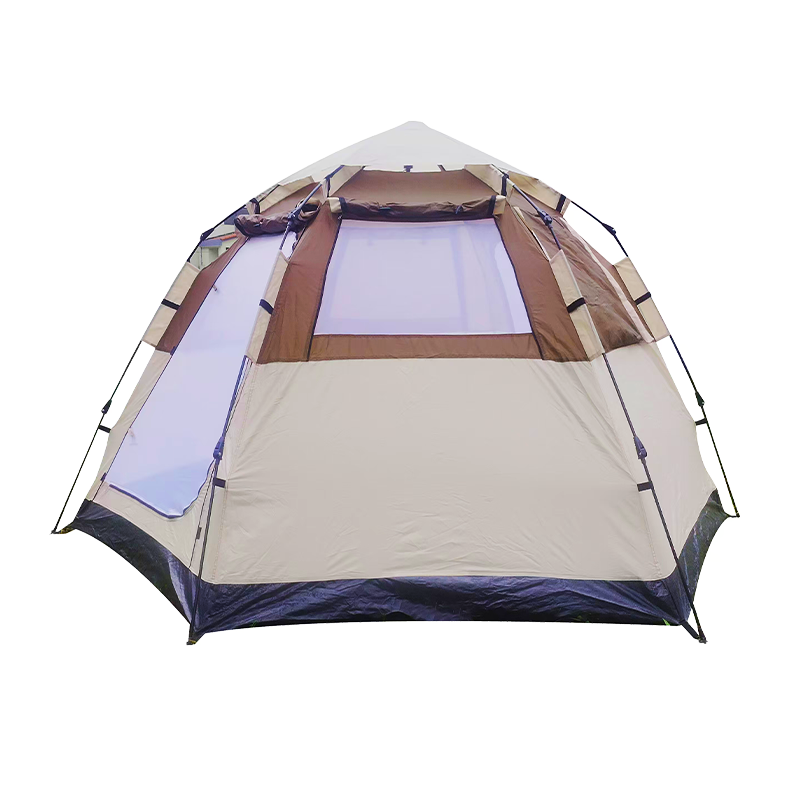
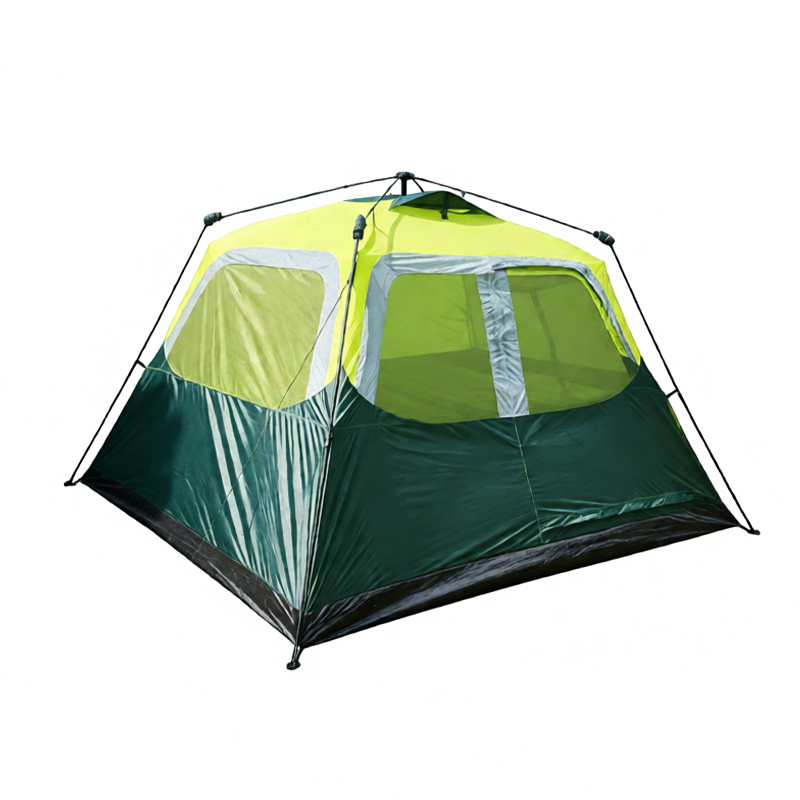
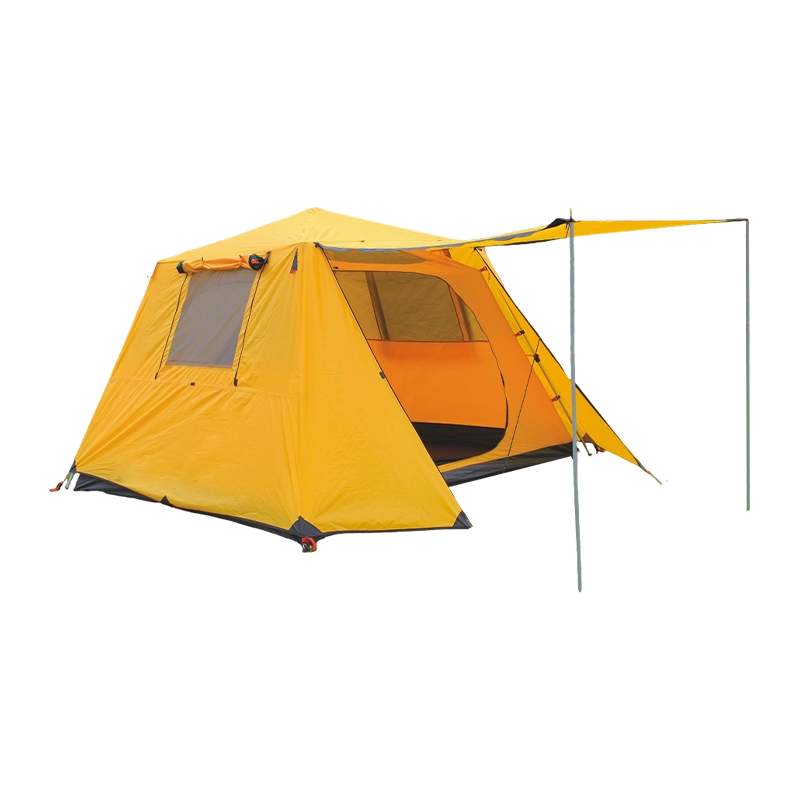 4-Person Automatic Tent with Aluminum PolesA quick-opening aluminum frame and PU2000 ripstop shell make this convenient for family car camping and weekend outings.View Product →
 Lightweight 1–2 Person Silnylon Hiking Tent20D silnylon fabrics and 7001 aluminum poles keep this tent portable for backpacking and short trips while offering PU3000 rain protection.View Product →
Choosing by Trip Type
- Choose a dome tent for backpacking, solo or couple trips, small pitches, and exposed campsites where wind and rain are likely.
- Choose a cabin tent for family camping, long stays, car-based trips, and groups that need room for cots, gear, and a shared living space.
- Look beyond the label if the frame, fabric, ventilation, and waterproof construction do not suit the climate.
- Set up the tent before buying when possible, or review the floor plan and pole count carefully for the group size.
What We Look For on the Factory Floor
As a tent manufacturer, we do not treat shape as a marketing badge. We look at how the frame transfers load, how seams are sealed, how vents manage condensation, and whether the floor dimensions match the people and gear the tent is meant to serve. A well-made dome tent and a well-made cabin tent can both be dependable; the weak point is usually a detail, not the silhouette.
Buyers who want to compare constructions can see how we build and test tents, from fabric inspection to pole assembly and waterproof checks. If you are planning a range for family camping or lightweight travel, contact our team with your target market and specifications.
A Practical Verdict
Neither shape wins everywhere. Pick the dome when portability, weather resistance, and a small pitch matter most. Pick the cabin when interior volume, standing room, and a comfortable base camp matter more than packed size. Match the tent to the trip, and the shape question becomes much easier to answer.
-
25 Sep, 2026
Two in the morning. The tent walls are beaded with moisture, the sleeping bag feels damp, and the air inside is stale. This is a familiar scenario for campers ...READ MORE
-
16 Oct, 2026
Choosing a tent looks simple until you are standing in front of thirty of them. Two-person or four-person, pop-up or pole, silnylon or polyester. After more th...READ MORE
-
23 Oct, 2026
Every tent we design starts with the same question: how will air get in, and how will it get out? Ventilation is the quiet feature that decides whether you wak...READ MORE
-
21 Nov, 2026
Instant tents have changed the way people plan a weekend of camping: unclip the strap, lift the frame, and the tent takes shape. But “instant” does not guarant...READ MORE
-
18 Sep, 2026
You unzip the tent, and the smell hits you first: damp earth, condensation, and the faint sour note of a storm that passed two nights ago. A tent that has been...READ MORE
-
27 Aug, 2026
A buyer once showed us two lightweight hiking tents with the same floor space. One weighed 1.6 kg and the other 2.4 kg. Both had a rain fly and two doors. One ...READ MORE

-
+86-15867893553
- [email protected]
- 6th Floor, Building 8, Wanyang Innovation City, Baifeng Street, Beilun District, Ningbo City, Zhejiang Province, China.
Copyright © Ningbo Kaima Outdoor Products Co., Ltd.All Rights Reserved.
 Custom Outdoor Lightweight/Packable Tent Manufacturers
