


 English
 Español
 русский
 Deutsch
 عربى
عربى
Why Choosing the Right Two-Person Backpacking Tent Matters
Content
- 1 What Makes a Two-Person Backpacking Tent Different from a Car Camping Tent
- 2 Key Specifications to Evaluate
- 3 The Four Main Tent Architecture Types for Two People
- 4 Three-Season vs. Four-Season: Which Do Two People Need?
- 5 Weight Distribution Between Two Backpackers
- 6 Budget Categories and What to Expect at Each Price Point
- 7 Top Features That Separate Good Two-Person Tents from Great Ones
- 8 Comparing the Best Two-Person Backpacking Tent Configurations by Use Case
- 9 How to Test and Evaluate a Two-Person Tent Before a Trip
- 10 Care and Maintenance to Maximize Tent Lifespan
- 11 Final Verdict: How to Choose the Best Backpacking Tent for Two
Sharing a backpacking tent with a partner, friend, or hiking companion changes almost every variable in your gear decision. You are now negotiating two sets of sleep preferences, splitting one shelter's weight across two packs, and selecting a floor area that needs to accommodate two sleeping pads, two sleeping bags, and enough gear to keep both occupants comfortable through whatever conditions you encounter.
The best backpacking tent for two is not simply a solo tent with extra room. It is a purpose-designed system that balances livable interior space, manageable packweight, weather resistance, and ease of setup — all within a price range that makes sense for the level of use you expect. Get that balance wrong and the tent becomes either a burden on the trail or a misery in camp.
This guide breaks down every factor that matters when selecting a two-person backpacking tent, compares the main shelter categories available, and gives you the framework to make a confident decision before you spend a dollar.
What Makes a Two-Person Backpacking Tent Different from a Car Camping Tent
The distinction between a backpacking tent and a car camping tent seems obvious until you are standing in a gear shop comparing specifications. Both say "2-person" on the label. Both promise weatherproofing. The differences are hidden in the weight, the packed volume, and the engineering decisions made to achieve them.
A typical two-person car camping tent weighs 3 to 6 kilograms and prioritizes standing room, thick poles, and heavy-duty fabrics. A two-person backpacking tent targets under 2 kilograms — and the best ultralight options push below 1 kilogram — by using thin-diameter aluminum or carbon poles, silicone-coated ripstop fabrics, and minimalist architecture that eliminates every gram that does not serve a structural or weather-protection function.
Packed volume follows the same logic. A car camping tent rarely compresses smaller than a large backpack. A backpacking tent for two should pack to roughly the size of a football — small enough to distribute between two packs or carry in an external pocket without dominating your load.
Key Specifications to Evaluate
Before comparing specific tents, you need a working understanding of the numbers that define two-person backpacking tent performance. These are the specifications that matter most.
Packweight and Trail Weight
Manufacturers often list two weight figures. "Minimum weight" or "trail weight" refers to the tent body, fly, and poles only — the minimum you need to pitch a functional shelter. "Packweight" includes stakes, stuff sacks, and all accessories. Always compare packweight figures when evaluating tents against each other, as minimum weight comparisons can be misleading by 100–300 grams. For a two-person backpacking tent, a packweight under 1.8 kg is competitive; under 1.2 kg is ultralight territory.
Floor Area and Peak Height
Two-person backpacking tents typically offer 3.5 to 5.5 square meters of floor area. The lower end accommodates two regular sleeping pads side by side with minimal margin; the upper end provides enough room to shift positions, keep gear inside, and remain comfortable on extended trips. Peak height ranges from 90 cm in low-profile designs to 120 cm or more in taller freestanding models — meaningful when you need to sit up and change clothes without contorting.
Hydrostatic Head Rating
The hydrostatic head (HH) rating measures how much water pressure a fabric can resist before leaking. For the rainfly, a rating of 1,500 mm HH is the minimum acceptable for rain protection; most quality backpacking tents rate their fly at 1,500–3,000 mm. The floor typically requires a higher rating of 3,000–10,000 mm because it faces direct ground contact and the weight of occupants. Any figure below 1,500 mm on the fly should be considered unsuitable for serious backpacking conditions.
Vestibule Space
A vestibule is the covered porch area outside the main door, created by the overhanging fly. For two people, vestibules are not optional luxuries — they are essential storage zones for muddy boots, wet rain gear, and shared cooking equipment. A single vestibule of 0.8 square meters or more is the minimum useful size; two vestibules (one per door) is ideal for independent access without disturbing a sleeping partner.
Pole Material and Diameter
Aluminum alloy poles (typically 7001 or 7075 series) dominate the backpacking tent market for their balance of weight, stiffness, and repairability. Carbon fiber poles save additional weight but are more brittle and harder to field-repair. DAC Featherlite poles are a widely respected aluminum option found in many mid-to-premium tents. Pole diameter matters for wind resistance: 8.5 mm diameter poles offer a notable stiffness advantage over 7.9 mm poles in storm conditions.
Number of Doors
Single-door tents require the person sleeping nearest the door to climb over their partner for any nighttime exit. For couples this may be tolerable; for hiking partners sharing a tent, two doors is strongly preferred. Two-door designs typically add 100–200 grams versus equivalent single-door models — a worthwhile tradeoff for most non-ultralight-obsessed users.
The Four Main Tent Architecture Types for Two People
The shape and pole structure of a tent determines its interior volume, wind resistance, weight efficiency, and setup complexity. Understanding these four architectures helps you match a tent type to your specific use case before comparing individual models.
Freestanding Double-Wall Dome
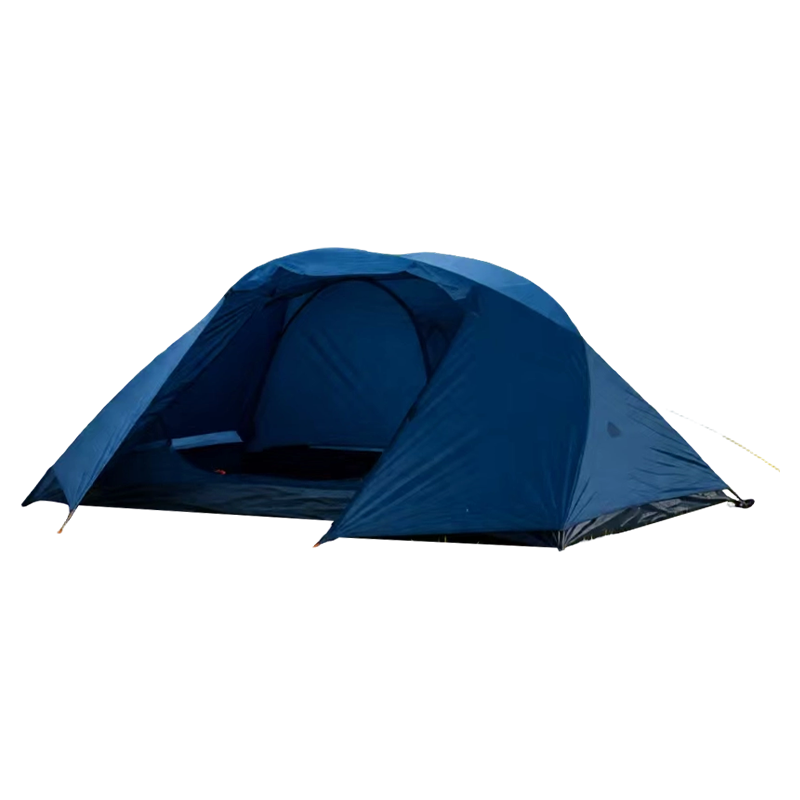
The most common two-person backpacking tent configuration. Two crossing poles create a dome that stands independently without stakes, making it easy to pitch on hard ground and reposition after setup. The separate rainfly creates an airspace that dramatically reduces condensation compared to single-wall designs. Freestanding dome tents are the best all-around choice for most two-person backpacking trips due to their setup simplicity, good interior volume, and reliable weather protection. Typical packweight runs 1.4–2.2 kg for quality three-season models.
Freestanding Double-Wall Tunnel
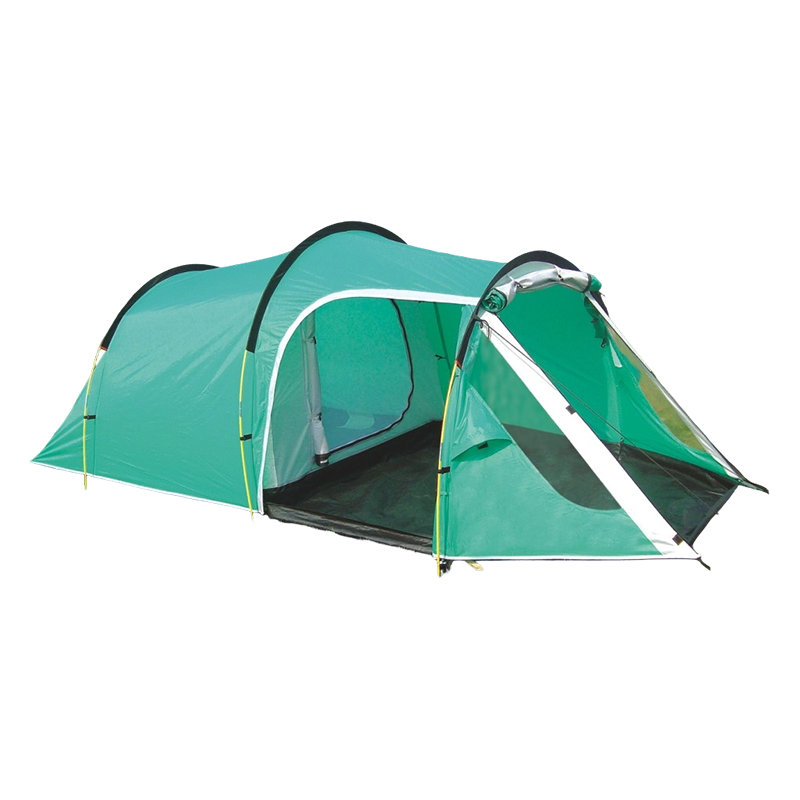
Tunnel tents use two or three parallel hoops to create a longer, lower structure with superior floor area and headroom per gram of tent weight. They are not truly freestanding — they require stakes at each end to maintain structure — but setup is straightforward once practiced. Tunnel designs shine for two people because the parallel sleeping zone allows generous width without the dead space at the ends that characterizes some dome configurations. Leading tunnel designs achieve packweights of under 1.1 kg for two people, making them the dominant choice in the ultralight category.
Semi-Freestanding and Hybrid Designs
Semi-freestanding tents use a single crossing-pole dome for the sleeping area combined with a tensioned guyline or second pole for the vestibule. These designs concentrate weight savings in the vestibule structure while maintaining the convenience of a freestanding body. They are popular in tents targeting the 1.0–1.5 kg range for two people, where architects are looking for every gram reduction that does not compromise interior livability.
Non-Freestanding Shelters (Trekking Pole Tents)
Trekking pole tents eliminate dedicated poles entirely, using the poles you are already carrying to pitch the shelter. For two people, these designs can achieve packweights of 700–900 grams — territory no freestanding tent can reach at a comparable price. The tradeoffs are a steeper learning curve, greater sensitivity to site selection, and the need to carry trekking poles (or bring a dedicated staff). Best suited for experienced backpackers who prioritize weight above all else.
Three-Season vs. Four-Season: Which Do Two People Need?
The vast majority of two-person backpacking trips take place under conditions that a three-season tent handles comfortably. Understanding the actual boundary between these categories prevents both overspending on unnecessary cold-weather capability and underpreparing for serious conditions.
Three-Season Tents (Spring Through Fall)
Three-season tents are designed for conditions ranging from warm summer nights to cold autumn rain and wind. They feature substantial mesh panels in the inner tent for ventilation and condensation control in warm conditions, combined with a full-coverage rainfly for rain and moderate wind. Most can handle light snow loads from early or late season storms. For the majority of backpackers, a three-season tent is the correct choice — it covers 95% of conditions at a significantly lower weight and price than four-season alternatives.
Four-Season and Alpine Tents
Four-season tents replace most mesh panels with solid fabric to retain warmth and resist spindrift. They use heavier-gauge poles, more stake points, and lower profiles to handle significant snow loading and sustained high winds. A quality four-season two-person tent typically weighs 2.0–3.5 kg — substantially more than three-season equivalents — and costs considerably more. Choose four-season only if you regularly camp above treeline in winter conditions, undertake mountaineering expeditions, or face sustained winds above 80 km/h.
Extended-Season (Three-to-Four-Season) Designs
A growing category of tents occupies the middle ground: solid fabric inner construction with reinforced pole systems capable of handling moderate snow, combined with weights closer to three-season tents. These designs suit two-person teams who push into shoulder-season conditions — late fall ridgeline camping, early spring alpine starts — without committing to full winter mountaineering territory.
Weight Distribution Between Two Backpackers
One of the most significant advantages of sharing a tent between two people is the ability to split the load. A two-person backpacking tent weighing 1.6 kg adds only 800 grams per person — less than many solo backpacking tents. How you split the tent determines both the fairness of the load and the practicality of setup if you arrive at camp separately.
- Poles + stakes / body + fly split: One person carries the poles and stakes; the other carries the tent body and fly. This is the most common approach and keeps packs balanced. Drawback: neither person can pitch the tent alone if they arrive first.
- Fly + poles / body split: One person carries the rainfly and poles; the other carries the inner body. Either person can create emergency shelter alone. Better for groups that may separate during the day.
- Full tent in one pack: Sometimes the stronger or more lightly loaded hiker carries the whole tent. Useful for day hikes where weight equity matters less than convenience.
Many ultralight tunnel tents compress the entire shelter into a single stuff sack under 1 liter in volume, making the single-pack approach practical. For tents with larger packed volumes, the split approach is almost always more comfortable for both carriers.
Budget Categories and What to Expect at Each Price Point
Two-person backpacking tents span a wide price range, and understanding what each tier buys you prevents both overspending and disappointment from a false economy purchase.
Under $150: Entry-Level Backpacking Tents
At this price point, expect aluminum poles (often lower alloy grades), heavier fabrics with minimal silicone treatment, and packweights in the 2.0–2.8 kg range. These tents are weatherproof enough for calm to moderate conditions and represent a reasonable starting point for occasional backpackers. Quality control and long-term durability are the main risks — seam tape and zippers in particular may need earlier replacement than in premium models.
$150–$350: Mid-Range Performance
The most competitive price band in the two-person backpacking tent market. You gain access to quality alloy poles (including DAC Featherlite in some models), silicone-coated nylon or polyester fabrics, improved seam construction, and packweights in the 1.4–2.0 kg range. Most mainstream brands offer their best-selling two-person designs at this price point. For backpackers who camp ten to thirty nights per year, this tier represents the strongest value proposition.
$350–$600: Premium Lightweight
Premium lightweight tents use higher-specification silnylon or silpoly fabrics, optimized pole geometry, and refined architecture to push packweights below 1.3 kg without sacrificing usable interior space. Vestibule areas are generous, door systems are well-engineered, and the tent has been genuinely optimized for backpacking rather than adapted from a car camping lineage. This tier suits dedicated backpackers who log thirty or more nights annually and treat weight as a meaningful performance variable.
$600 and Above: Ultralight and Specialty
At the top of the market, Dyneema Composite Fabric (DCF) shelters, carbon fiber poles, and ultralight trekking pole designs achieve packweights of under 900 grams for two people. These tents are purpose-built for weight-obsessed applications: thru-hiking, fastpacking, and expedition travel where every gram compounds over thousands of kilometers. The tradeoffs are cost, reduced abrasion resistance versus silnylon/silpoly, and in some designs reduced interior volume per gram of tent weight.
Top Features That Separate Good Two-Person Tents from Great Ones
Once you have narrowed the field by architecture, weight, and budget, a set of secondary features distinguishes genuinely well-designed tents from those that simply meet the minimum specifications on paper.
Pitching Flexibility
The ability to pitch the fly without the inner body — creating a quick rain shelter while you set up the rest of camp — is a feature that significantly improves real-world usability. Some two-person tents also offer the option to pitch the inner body alone for a bug-net-only shelter in dry conditions. Fly-first pitching capability is one of the most underrated features in a backpacking tent and is worth actively seeking out.
Internal Organization
Gear loft pockets, corner storage pockets, and interior hang loops for a headlamp or wet socks transform the usable interior of a tent beyond its bare floor dimensions. For two people sharing a confined space, the difference between a tent with thoughtful interior storage and one without it is felt every morning and evening in camp.
Guy Line System and Storm Anchoring
A well-designed guy line system — with clearly marked attachment points, pre-tied reflective cord, and tensioners that work with gloves on — is essential for storm conditions. Some two-person tents include mid-panel guy loops that dramatically stiffen the structure in high wind. Check for these features specifically if you camp in exposed alpine locations or coastal environments where wind is a regular factor.
Ventilation Architecture
Two people generate significantly more moisture than one — approximately double the breath and body heat condensation. A two-person tent that ventilates poorly will accumulate condensation on the inner walls and underside of the fly regardless of weather conditions. Look for fly vents that remain open in rain, substantial mesh areas in the inner tent, and a fly cut high enough above the ground to allow airflow circulation even when the doors are zipped closed.
Ease of Repair in the Field
A broken pole or torn seam at the trailhead is an inconvenience; the same failure three days into a remote trip is a safety issue. Tents with standard pole diameter sections, included pole repair sleeves, and seam tape that can be augmented with standard repair kits give two-person teams meaningful resilience. Carbon fiber poles and proprietary clip systems, while lightweight, rate poorly on this dimension.
Comparing the Best Two-Person Backpacking Tent Configurations by Use Case
Different two-person teams have different priorities. Matching the tent configuration to the actual use case prevents the frustration of a technically excellent tent that is wrong for your specific situation.
Couples on Three-Season Trips
A freestanding double-wall dome with two doors, two vestibules, and a floor area of at least 4.0 square meters is the ideal configuration. Setup simplicity matters because one partner is often unpacking while the other pitches. Budget of $200–$400 covers this category well. A packweight of 1.4–1.8 kg is achievable and reasonable for couples who share the load.
Experienced Hiking Partners Focused on Miles
Two experienced hikers who prioritize daily mileage benefit most from a tunnel tent or semi-freestanding design with a combined packweight under 1.2 kg. Each partner carries under 600 grams of shelter. The slight additional setup learning curve is negligible for experienced users. Budget $300–$550 for a quality tunnel design in this weight class.
Thru-Hikers and Fastpackers
Long-distance two-person teams benefit from the weight efficiency of trekking pole shelters or DCF tents. Total packweight targets of under 900 grams are achievable in this category. Durability becomes critical: a DCF shelter that tears on day 300 of a thru-hike is far more costly than the weight savings justify. Silnylon trekking pole tents often represent the best durability-to-weight value for thru-hiking pairs.
Weekend Backpackers and Occasional Users
Occasional two-person backpackers — five to fifteen nights per year — get the most value from mid-range freestanding domes in the $150–$250 range. The most important feature for this group is ease of setup, as infrequent use means less accumulated practice with complex systems. A tent that pitches correctly on the first try matters more than saving 200 grams at this use frequency.
Alpine and Winter-Capable Two-Person Teams
Teams camping in genuine winter conditions or exposed alpine environments above treeline should prioritize storm resistance over weight. A four-season or extended-season tent with multiple guy-out points, solid inner construction, and reinforced pole hubs is essential. Expect to carry 2.0–2.8 kg for a genuinely capable two-person winter shelter, and budget $400–$700 for a design that will not fail under sustained alpine storm conditions.
How to Test and Evaluate a Two-Person Tent Before a Trip
Purchasing a two-person backpacking tent and immediately taking it on a multi-day trip is a high-risk strategy. A proper shakedown process identifies problems while they are still easy to address.
- Pitch the tent at home before seam sealing. Learn the pole routing, clip system, and stake points in a low-stakes environment. Note any poles or clips that require unusual force — these will be more problematic in the dark or in rain.
- Seam seal before first use. Even tents marketed as "factory seam sealed" benefit from an additional application of seam sealer on the floor seams and any fly seams that appear lightly covered. Allow 24 hours of curing time before packing.
- Conduct a backyard rain test. Pitch the tent on the lawn, zip everything closed, and run a garden hose over it for ten minutes. Check the floor seams, zipper margins, and around any stake-out points for water intrusion. A brief garden test is far better than discovering a leak on night one of your trip.
- Simulate the sleeping configuration with both users. Lay both sleeping pads inside with both sleeping bags deployed. Verify that two people can actually sleep without contact with the tent walls, that gear has somewhere to go, and that both doors are accessible without climbing over the other person.
- Do a short overnight before the main trip. A single night camping close to home with your full two-person kit surfaces minor issues — a missing stake, a zipper that requires lubrication, a headlamp loop that is unusable — before they matter.
Care and Maintenance to Maximize Tent Lifespan
A quality two-person backpacking tent is a significant investment. Proper care extends its effective life from a few seasons to a decade or more of regular use.
- Never store the tent compressed. The compression of a stuff sack is appropriate for transport but destroys seam tape, degrades pole shock cords, and fatigues fabric coatings over time. Store your tent loosely in a large mesh bag or draped over a hanger between trips.
- Air dry completely before storage. Mold and mildew destroy silicone coatings from the inside out and are nearly impossible to reverse once established. Even a slightly damp tent packed for a week in a gear closet can develop permanent odor and coating damage.
- Clean gently with cold water and a sponge. Avoid soap, detergent, or machine washing. These strip durable water repellent (DWR) coatings and can degrade silicone treatments. For stubborn dirt, use a soft brush and cold water only.
- Re-treat DWR coatings periodically. When water no longer beads and rolls off the fly surface, the DWR treatment is depleted. Wash-in or spray-on DWR treatments restore performance and cost far less than replacing the tent. Re-treat every one to two seasons of active use.
- Lubricate zippers with zipper wax or Teflon-based lubricant. Sticky or grinding zippers are the most common field failure in backpacking tents. Regular lubrication keeps zippers running smoothly and prevents the tooth damage that requires full zipper replacement.
- Use a footprint on abrasive surfaces. A groundsheet adds modest weight but dramatically extends floor life by preventing abrasion from sand, gravel, and rocky surfaces that gradually thin the floor laminate from below.
With consistent care, a mid-range two-person backpacking tent should comfortably deliver 200–400 nights of use — an effective cost per night of under $1 even on a $300 purchase. Premium models with proper maintenance can far exceed this figure.
Final Verdict: How to Choose the Best Backpacking Tent for Two
The best backpacking tent for two people does not exist as a single universal answer. It exists as the tent that best aligns with your specific combination of trail conditions, use frequency, weight priorities, budget, and the relationship between the two people sharing it.
For most two-person backpacking teams — couples and hiking partners using their tent ten to forty nights per year in three-season conditions — a double-wall freestanding dome or tunnel tent in the $200–$400 range, weighing 1.3–1.8 kg, will cover nearly every situation they encounter. Prioritize two doors, a minimum 4.0 m² floor area, at least 1,500 mm HH on the fly, and a vestibule on each side.
Experienced backpackers who log high mileage and treat weight as a meaningful performance variable should direct their attention to premium tunnel tents and semi-freestanding designs at the $350–$550 level, where the best weight-to-performance ratio in the two-person market currently lives.
Those pursuing true ultralight goals — sub-900-gram shared shelter weight — should evaluate trekking pole tents and DCF designs, accepting the higher cost, learning curve, and care requirements that come with extreme weight optimization.
Whatever tier you choose, buy the lightest tent that genuinely fits two people comfortably, learn to pitch it perfectly before you need to pitch it in the dark in the rain, and take care of it between trips. That combination — right spec, practiced technique, consistent maintenance — delivers far more value than any individual feature or brand name on the label.
-
30 Jul, 2026
Solo Hikers Face a Different Set of Trade-Offs Than Group Campers A hiker traveling alone carries every ounce of gear on their own back, without splitting tent...READ MORE
-
18 Jun, 2026
A portable sun-safe shelter is more than a convenience item for a day at the beach. It is a practical, evidence-backed layer of ultraviolet protection that ad...READ MORE
-
09 Jul, 2026
A day at the beach is one of life's simplest pleasures, yet it carries a hidden risk that many people underestimate until years of cumulative sun exposure begi...READ MORE
-
27 May, 2026
Every ounce matters when you're miles from the nearest trailhead. For long-distance backpackers, the shelter system is often the single heaviest item in the pa...READ MORE
-
25 Jun, 2026
A truly memorable family camping trip rarely happens by accident — it is built on thoughtful preparation and the right equipment. Choosing the ultimate gear fo...READ MORE
-
02 Jul, 2026
A day at the beach should be about relaxation, not worrying about sunburn or overheating. A high UPF portable sun-safe beach tent gives families, sunbathers, ...READ MORE
-
+86-15867893553
- km@kaima-outdoor.com
- 6th Floor, Building 8, Wanyang Innovation City, Baifeng Street, Beilun District, Ningbo City, Zhejiang Province, China.
Copyright © Ningbo Kaima Outdoor Products Co., Ltd.All Rights Reserved.
 Custom Outdoor Lightweight/Packable Tent Manufacturers
