


 English
 Español
 русский
 Deutsch
 عربى
عربى
What Makes a Tent "The Best"?
Content
- 1 What Makes a Tent "The Best"?
- 2 Types of Tents: Choosing Your Category
- 3 The Best Tents by Category: Top Picks
- 4 Key Factors That Determine Tent Quality
- 5 Tent Season Ratings Explained
- 6 Best Tent Comparison: At a Glance
- 7 How to Choose the Best Tent for You
- 8 Tent Maintenance: Making the Best Tent Last
- 9 Frequently Asked Questions About the Best Tents
There is no single best tent in the world — but there is a best tent for you, your conditions, and your style of adventure. Understanding what separates a great tent from a mediocre one is the knowledge that turns a miserable wet night in the backcountry into a confident, comfortable experience.
What Makes a Tent "The Best"?
The question of what the best tent is has no universal answer because tents are purpose-built tools. A three-season backpacking tent optimized for ultralight alpine travel would be a poor choice for a family car camping weekend — and vice versa. The best tent is the one that is correctly matched to your camping style, group size, climate exposure, and budget, then executed with quality materials and smart design.
That said, certain qualities define tent excellence across all categories: reliable waterproofing, structural stability in wind, ease of pitching, livable interior space, and durability proportional to the price paid. Within those shared standards, the best tent for a solo thru-hiker looks nothing like the best tent for a festival-goer or a winter mountaineer.
Types of Tents: Choosing Your Category
Before evaluating individual tent models, identifying the right category is the most important decision you can make. Each tent type is engineered around different priorities, and choosing the wrong category will leave you with a tent that performs poorly regardless of brand or price.
Weight-optimized tents for hikers carrying everything on their back. The best examples weigh under 1kg per person and pack to the size of a Nalgene bottle.
Spacious, feature-rich tents prioritizing livability over portability. Separate rooms, standing height, and fast pitching matter more than weight.
Built to survive extreme wind loading, heavy snow, and sub-zero temperatures. Uses solid pole geometry and minimal mesh to retain heat.
Ultra-compact designs that pack into cylinder or triangular bags to mount on a bike frame. Combines ultralight philosophy with robust weather protection.
Pop-up and instant tents designed for infrequent use and minimal setup time. Prioritizes convenience and low cost over durability and weather performance.
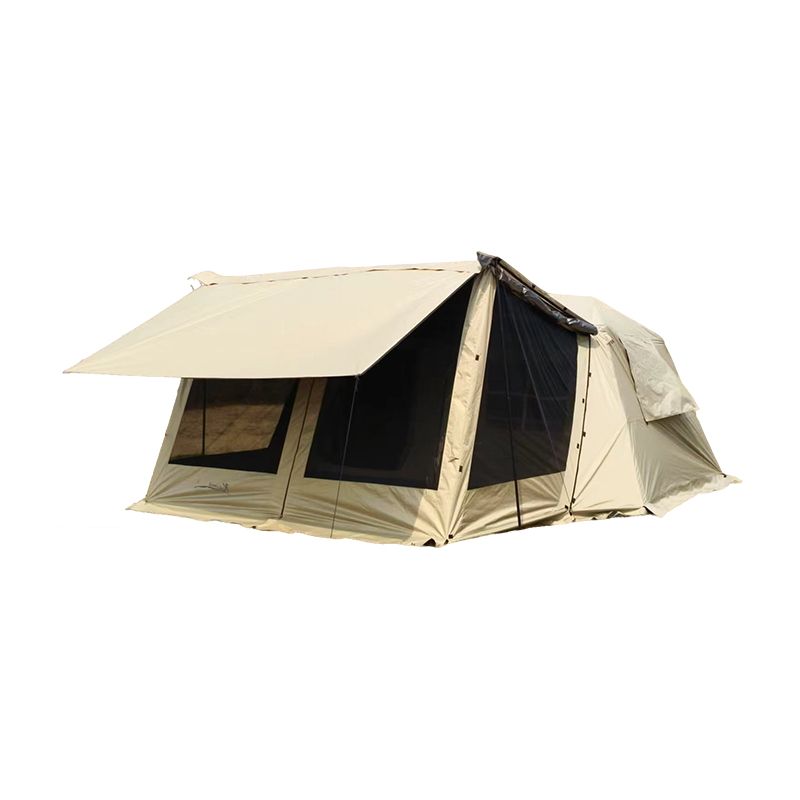
Large-footprint canvas tents designed for comfort, aesthetics, and semi-permanent setup. Breathable, insulating, and capable of housing furniture and stoves.
The Best Tents by Category: Top Picks
The following selections represent the strongest performers in each category based on construction quality, real-world weather performance, user feedback, and value. These are benchmarks — tents that genuinely deliver on their promises.
The gold standard in ultralight two-person backpacking tents. Its hub-and-pole system creates exceptional headroom relative to weight, and the dual-door design gives each camper private access. Handles three-season weather with confidence.
A genuinely livable family tent with vertical walls, a divider for two rooms, and enough headroom to change clothes comfortably. The bathtub floor and 1,500mm-rated fly handle rain well. Setup takes around 20 minutes solo.
Swedish-engineered for serious winter and expedition use. The linked inner-and-outer system means you pitch both simultaneously, keeping the interior dry in snowstorms. Exceptional pole architecture handles exceptional wind loading.
Exceptional weather performance at an accessible price point. The tunnel design is aerodynamically efficient in wind, and the 5,000mm hydrostatic head rating is competitive with tents costing three times more. A smart buy for committed weekend campers.
A masterclass in single-person ultralight shelter design, using trekking poles as the structure to eliminate dedicated pole weight. Under 600g of packed weight for a fully enclosed, weatherproof shelter is a genuine technical achievement.
The definitive canvas bell tent for those who want comfort in the field. Polycotton canvas breathes to prevent condensation, insulates effectively, and weathers beautifully over years of use. Central pole allows maximum interior freedom.
Key Factors That Determine Tent Quality
When evaluating any tent — regardless of brand marketing or headline price — the following technical factors determine actual performance in the field. Understanding these separates informed buying decisions from expensive mistakes.
Measured in millimetres (mm), the hydrostatic head (HH) rating indicates how much water pressure a fabric can resist before leaking. A rating of 1,500mm is the minimum for the flysheet; 3,000mm+ is recommended for exposed conditions. The groundsheet should always be rated higher — 5,000mm or more — as it faces direct pressure loading from body weight and ground water.
Aluminium alloy poles — specifically 7001 or 7075 series — are the gold standard for strength-to-weight ratio and repairability. DAC and Easton are the two leading pole manufacturers, and their inclusion is a reliable quality indicator. Fibreglass poles are heavier and more brittle, appropriate only for budget family tents where weight is not a concern. Pole geometry (dome, tunnel, geodesic) determines wind resistance; geodesic and semi-geodesic designs are most stable in extreme conditions.
Denier (D) measures thread thickness in the woven fabric. Lower denier (15D–30D) means lighter weight but reduced puncture resistance; higher denier (40D–70D) adds durability at the cost of weight. Premium fabrics use ripstop weaving to prevent tear propagation even in thin materials. Silnylon and silpoly (silicone-coated nylon and polyester) are the best performing lightweight materials; polyester stretches less in rain than nylon, reducing sag.
Even high-rated fabrics will leak through needle holes at seam lines unless those seams are sealed. Factory-taped seams (where a waterproof tape strip is applied over every sewn seam) are significantly more reliable than field-applied seam sealer, which degrades over time and requires reapplication. Always verify that the flysheet seams are factory-taped — this is a common quality differentiator between budget and mid-range tents.
Ventilation and Condensation Management
Condensation is one of the most misunderstood tent problems. Campers often assume a wet tent interior means the tent is leaking — but in the majority of cases, the moisture is condensation from the occupants' breath and body heat accumulating on the inner surface of the flysheet. Good tent design manages this through a combination of factors: sufficient distance between inner tent and fly, mesh panels in the inner tent that allow moisture vapour to pass through, and ventilation openings (typically at both ends) that create airflow to carry humid air out of the tent.
In cold-weather or single-skin tent designs, condensation becomes significantly more challenging to manage. Double-wall construction — where a breathable inner tent is separated from the waterproof fly by an air gap — remains the most effective solution for three-season conditions. Single-skin shelters (tarps, bivy sacks) offer minimum weight but require careful management.
Tent Season Ratings Explained
Season ratings provide a useful framework for matching tent performance to conditions, though they are not a standardised technical specification and vary between manufacturers. Understanding what each rating actually means in practice prevents dangerous mismatches between tent capability and environmental conditions.
Best Tent Comparison: At a Glance
| Tent | Category | Weight | Seasons | Waterproofing | Setup | Value |
|---|---|---|---|---|---|---|
| Big Agnes Copper Spur HV UL2 | Backpacking | 1.1kg | 3-Season | 1,200mm fly | Fast | Premium |
| REI Co-op Kingdom 6 | Family | 6.2kg | 3-Season | 1,500mm+ | 20 min | Good |
| Hilleberg Nammatj 2 | Alpine/4-Season | 2.6kg | 4-Season | 5,000mm+ | Linked system | Luxury |
| Vango Blade Pro 200 | Budget 3-Season | 2.3kg | 3-Season | 5,000mm | Moderate | Excellent |
| Tarptent Protrail Li | Ultralight Solo | 560g | 3-Season | Silnylon | Pole-dependent | Very Good |
| Sibley Bell 5m | Canvas/Glamping | ~18kg | 3-Season | Canvas HH rated | Slow | Moderate |
How to Choose the Best Tent for You
The right tent emerges from an honest assessment of how, where, and with whom you camp — not from what looks impressive in a photograph. Use the following framework to narrow your choice:
- Start with group size and headcount: Buy for the number of people actually sleeping in the tent, plus one size if any of them are tall, broad-shouldered, or travelling with gear they need to store inside. A "two-person" tent from many manufacturers means two people lying very close together with no gear.
- Identify your worst-case weather conditions: If you camp exclusively in summer in lowland areas, a 2-season tent is perfectly adequate. If you camp in exposed highlands, coastal sites, or during autumn and spring, invest in a proper 3-season tent with a high hydrostatic head rating. Do not underestimate this — a failing tent in a storm is a serious safety issue, not just an inconvenience.
- Set a realistic weight budget for backpacking: For multi-day hiking, tent weight is a significant factor in overall pack weight and daily comfort. Target a combined packed weight — tent plus poles, pegs, and stuff sack — of no more than 500–700g per person for ultralight trips, or up to 1.2kg per person for standard three-season backpacking.
- Prioritise double-wall construction: Unless you are specifically pursuing ultralight or bivy-style minimalism, double-wall construction (inner tent plus separate flysheet) dramatically improves condensation management and occupant comfort in all conditions. Single-wall tents are a significant technical compromise that should be made knowingly.
- Test pitch before your first trip: Always pitch your tent in the garden before taking it into the field. Familiarise yourself with the pole configuration, peg positions, and guy-line angles in daylight before you need to do it in the dark or in the rain. A tent you can pitch confidently is worth more than one you cannot.
- Consider vestibule space: Vestibules — the covered porch area outside the sleeping compartment under the flysheet — are enormously valuable for storing wet boots, muddy gear, and cooking equipment in bad weather. When comparing tents, look at vestibule floor area in addition to sleeping area figures.
- Check peg and guy-line requirements: Some tent designs — particularly tunnels and tarps — are not freestanding and require careful pegging to maintain their structure. This is not a disadvantage, but it does mean they cannot be moved once pitched and require more time and skill to pitch correctly in hard or rocky ground.
Tent Maintenance: Making the Best Tent Last
Even the highest-quality tent will deteriorate rapidly without proper care. The two most common causes of premature tent failure are UV degradation from storage in direct sunlight and mould growth from packing the tent away wet. Neither is a manufacturing defect — both are entirely preventable.
- Never pack a wet tent: If conditions force you to pack up in rain, dry the tent as soon as possible after returning home — ideally within 24 hours. Packing a wet tent even briefly in a stuff sack can begin mould growth that is impossible to fully reverse and will eventually delaminate the polyurethane waterproof coating.
- Store loosely, not compressed: Long-term storage in a compressed stuff sack fatigues the fabrics and puts sustained stress on the pole sleeves and seam tape. Store the tent loosely in a large mesh bag in a cool, dry location away from direct sunlight.
- Re-seam and re-waterproof periodically: Factory seam tape eventually loses adhesion, and the DWR (durable water repellent) coating on the fly degrades with UV exposure and washing. Inspect seams annually and re-apply seam sealer where needed; restore DWR performance with a wash-in waterproofing treatment every 2–3 years of regular use.
- Use a footprint groundsheet: A custom-fit groundsheet (or footprint) between the tent floor and the ground dramatically reduces abrasion wear on the tent floor — the most expensive single component to replace. The cost of a footprint is a fraction of the cost of a replacement tent, particularly for high-end models.
- Clean gently and correctly: Spot-clean with a soft cloth and cold water. Never machine-wash a tent — the mechanical agitation and heat damage fabrics, delaminate coatings, and destroy pole sleeves. A sponge and mild soap are all that is ever needed.
Frequently Asked Questions About the Best Tents
What is the most weatherproof tent available?
For civilian use, the Hilleberg range — particularly the Keron, Nammatj, and Stalon — represents the benchmark in weatherproof tent engineering. The Swedish brand's linked inner-outer pole-and-fabric system, 9,000mm hydrostatic head fabrics, and geodesic-influenced geometry combine to create tents capable of surviving conditions that would destroy lesser designs. For expedition use in polar or extreme altitude conditions, manufacturers such as Terra Nova, Black Diamond, and The North Face Expedition series offer purpose-built solutions.
What is the lightest tent that is still genuinely weatherproof?
The Tarptent Protrail Li (560g), Big Agnes Fly Creek HV UL1 (under 700g), and MSR Carbon Reflex 1 represent the current frontier of ultra-lightweight weatherproof shelters. All three require either trekking poles or specific pitching skill and are not appropriate for beginners or for extreme weather — but for experienced ultralight hikers in three-season conditions, they deliver genuine protection at minimum weight.
How much should I spend on a tent?
For occasional summer camping (fewer than 10 nights per year), a well-chosen tent in the £80–£150 range will perform adequately. For regular three-season use (20+ nights per year), invest £200–£400 in a quality mid-range tent with proper materials and construction — the cost per use will be lower than a cheap tent replaced every two years. For serious backpacking, alpine, or expedition use, the £400–£1,000+ category delivers meaningfully better performance, reliability, and longevity that justifies the investment for committed users.
Can a three-season tent handle snow?
A well-designed three-season tent can handle light snowfall in temperatures slightly below freezing — but it is not designed for sustained snow loading, which accumulates on the relatively low-angle flysheet and can cause pole failure or collapse. If there is any possibility of significant snowfall, a four-season tent with steeper fly geometry and a stronger pole structure is the correct specification. Never assume a three-season tent will perform safely in winter mountain conditions.
-
13 Aug, 2026
What An Inflatable Tent Is And How It Holds Its Shape An inflatable tent replaces traditional metal or fiberglass frames with an air-supported structure, using...READ MORE
-
07 May, 2026
Whether you're heading out for a weekend getaway, a music festival, or an impromptu camping trip after work, nothing kills the outdoor vibe faster than wrestlin...READ MORE
-
16 Apr, 2026
body { font-family: Arial, sans-serif; color: #222; background: transparent; margin: 0; padding: 0; } section { margin-bottom: ...READ MORE
-
23 Apr, 2026
An ultralight pyramid tent is a minimalist shelter system built around a single central pole — or a trekking pole — with fabric that drapes outward in a four-s...READ MORE
-
14 May, 2026
A blackout air tent combines two of the most significant innovations in modern camping shelter design: inflatable air-beam technology and light-blocking fabric....READ MORE
-
21 May, 2026
The inflatable tent market has diversified substantially, with distinct product families optimized for different use cases and scale requirements. These structu...READ MORE
-
+86-15867893553
- km@kaima-outdoor.com
- 6th Floor, Building 8, Wanyang Innovation City, Baifeng Street, Beilun District, Ningbo City, Zhejiang Province, China.
Copyright © Ningbo Kaima Outdoor Products Co., Ltd.All Rights Reserved.
 Custom Outdoor Lightweight/Packable Tent Manufacturers
