

 English
 Español
 русский
 Deutsch
 عربى
عربى
A portable sun-safe shelter is more than a convenience item for a day at the beach. It is a practical, evidence-backed layer of ultraviolet protection that addresses a genuine public health need. With skin cancer rates continuing to rise globally, and with outdoor recreation, sports, and work exposing people to cumulative UV radiation over a lifetime, purpose-built portable shelters that reliably block solar radiation have become an important category of protective gear for families, athletes, outdoor workers, and health-conscious individuals alike.
Understanding UV Radiation and the Case for Portable Shelter
The sun emits ultraviolet radiation across three wavelength bands: UVA, UVB, and UVC. UVC is absorbed by the atmosphere before reaching the earth's surface. UVB, the primary cause of sunburn and a major contributor to skin cancer, peaks in intensity during midday hours. UVA penetrates more deeply into skin tissue, contributes to photoaging, and remains at significant levels throughout the day, even on overcast days. Both UVA and UVB exposure are cumulative, meaning damage builds invisibly across a lifetime well before visible symptoms appear.
Sunscreen is effective but requires correct application, reapplication every two hours, and the discipline to use it consistently -- conditions that are rarely met in practice, especially for children. Shade from permanent structures is intermittent and unavailable in open environments such as beaches, parks, sports fields, and job sites. A portable sun-safe shelter fills exactly this gap: it provides reliable, structural UV protection that is independent of user behavior after setup, and can be positioned wherever protection is needed most.
What Makes a Shelter Genuinely Sun-Safe
The term "sun shelter" covers a broad range of products, from lightweight beach canopies to purpose-built UV-blocking tents. Not all of them provide meaningful solar protection. Understanding the criteria that distinguish a genuinely sun-safe shelter from an ordinary shade structure is essential when evaluating options.
UPF Rating of the Fabric
The Ultraviolet Protection Factor (UPF) is the standard measure of how effectively a fabric blocks UV radiation. A UPF 50 rating means only one-fiftieth of incident UV radiation passes through the material. For a portable shelter to be considered genuinely sun-safe, the primary canopy fabric should carry a certified UPF 50+ rating -- the highest available classification. This rating is determined by laboratory spectrophotometry and accounts for both UVA and UVB transmittance. It is important to note that UPF can degrade with washing, stretching, moisture, and prolonged UV exposure, which is why fabric quality and maintenance matter beyond the initial rating.
Coverage Geometry and Shadow Footprint
A shelter's ability to protect depends not only on the fabric but on the geometry of the shade it casts relative to occupant position and solar angle. A low canopy that sits close to head height offers less oblique-angle protection than a taller design. Side walls significantly increase protection by blocking low-angle morning and afternoon sun, which can otherwise reach occupants even under a well-rated canopy. The best portable sun-safe shelters offer adjustable or removable side panels that allow occupants to adapt coverage throughout the day as the solar angle changes.
Ventilation and Thermal Comfort
Effective solar blockage naturally reduces airflow, which can make enclosed shelters uncomfortably hot in warm weather. Premium sun-safe shelters address this through mesh ventilation panels positioned to promote cross-airflow, elevated canopy vents that allow hot air to escape by convection, and reflective outer fabric layers that reduce radiant heat gain. A well-designed portable sun shelter should reduce the perceived heat load on occupants while simultaneously blocking UV radiation -- not force a compromise between protection and comfort.
Types of Portable Sun-Safe Shelters
Pop-Up Beach Tents
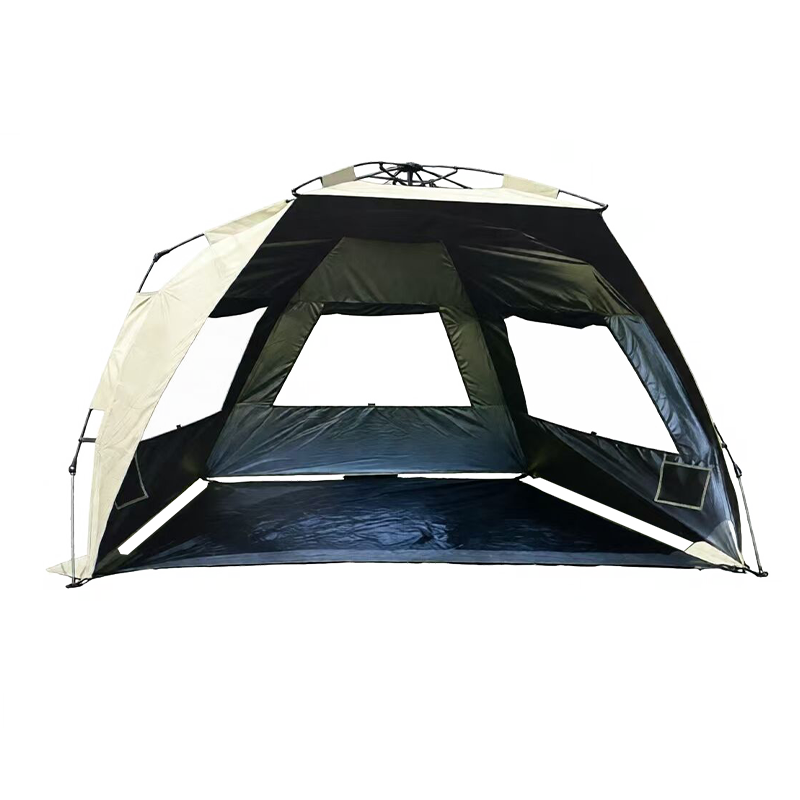
The pop-up beach tent is the most widely owned category of portable sun shelter. Constructed around a pre-tensioned flexible pole system or a hub-and-pole frame, these shelters spring into shape in seconds without any assembly steps. They are compact when folded, typically packing into a circular carry bag 60 to 80 cm in diameter. Better-quality pop-up beach tents include UPF 50+ rated fabric, at least one mesh side panel for ventilation, a sand pocket anchor system, and guy ropes for wind stability. Entry-level versions may have lower or unrated fabric and minimal anchoring, making them appropriate for casual shade but not for reliable UV protection.
Hub-and-Pole Canopy Shelters
Hub-and-pole canopies, commonly seen at sporting events, markets, and outdoor work sites, offer a larger footprint -- typically 3 x 3 meters or 3 x 6 meters -- with a rigid aluminum or steel frame that supports a removable canopy. When the canopy fabric carries a UPF 50+ rating and is paired with optional side walls, these shelters provide robust sun protection for groups. Their main disadvantage for genuine portability is weight and the two-person assembly typically required for larger sizes. However, wheeled carry bags and lighter aluminum frames have improved the practical transportability of this category significantly.
Cabana-Style Shelters
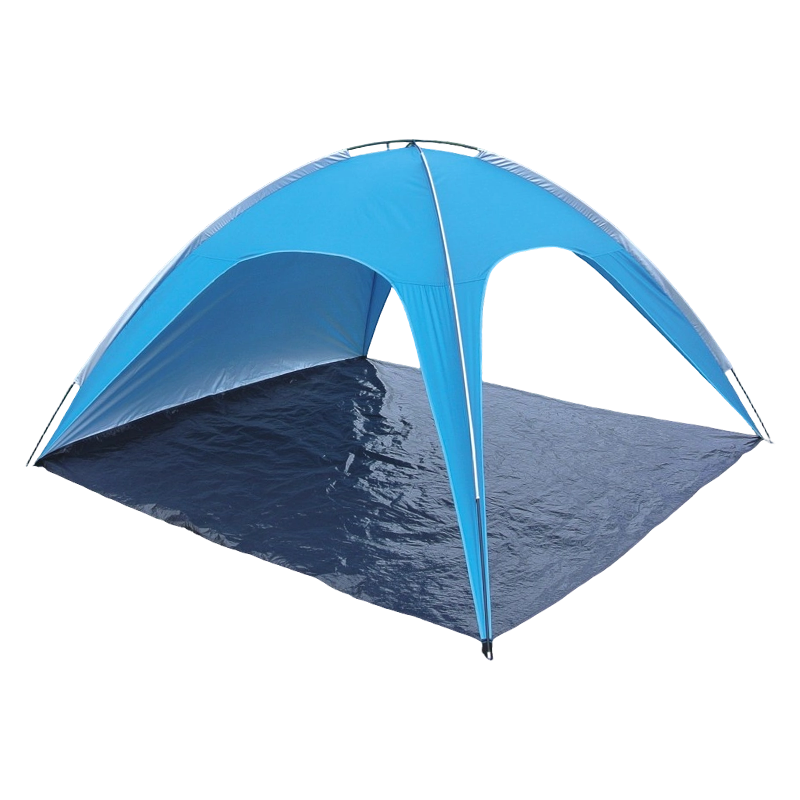
Cabana shelters are designed with a semi-open front and a more enclosed rear and sides, providing directional protection that works well on beaches where the sun's path is predictable relative to the shelter's orientation. Many cabana designs incorporate a built-in floor mat, pockets for personal items, and integrated pegs for sand anchoring. They offer a good balance between open access and UV coverage and are particularly popular for families with young children who need prolonged outdoor sun protection in a single location.
Shade Sails and Tarp Systems
Portable shade sails and tarp-based systems use anchor points -- trees, poles, vehicle hitches, or dedicated anchor stakes -- and tensioned lines to create flat or curved canopies above a sitting or activity area. When constructed from UV-stabilized, high-density polyethylene (HDPE) mesh fabric rated for solar blocking, they can provide effective sun protection over a larger area than frame-supported shelters. Their portability depends on the anchor infrastructure available at the destination, making them most practical for established campsites, backyards, and events rather than spontaneous beach or park use.
Portable UV-Protective Umbrella Systems
Sun umbrellas purpose-built for UV protection differ from standard beach umbrellas in their fabric specification, canopy tilt range, and base anchoring system. High-quality sun protection umbrellas use UPF 50+ coated fabric, often with a silver or reflective outer layer, and have tilting mechanisms that allow the canopy to track the solar angle. Weighted sand anchor bases or screw-in stake systems keep them stable in moderate wind. While limited to single-user or small group coverage, they are among the most portable and quickest-to-deploy options available.
| Shelter Type | Setup Time | Footprint | UPF Capability | Best For |
|---|---|---|---|---|
| Pop-Up Beach Tent | Under 1 min | 1-2 adults | 50+ (top models) | Beach, solo or couple |
| Hub-and-Pole Canopy | 5-15 min | 3x3 to 3x6 m | 50+ with rated canopy | Events, sports, groups |
| Cabana Shelter | 2-5 min | 2-4 people | 50+ (most models) | Families, beach days |
| Shade Sail / Tarp | 10-20 min | Variable | 50+ (HDPE rated) | Camping, established sites |
| UV Umbrella System | Under 2 min | 1-2 people | 50+ (specialist models) | Mobility, flexible use |
Key Features to Evaluate When Choosing a Portable Sun-Safe Shelter
Anchoring and Wind Resistance
A sun shelter that is not properly anchored is a safety hazard, not a protective tool. Wind can turn an unsecured canopy into a projectile that injures nearby people and is damaged beyond repair in a single gust. Quality portable shelters provide multiple anchoring options suited to the deployment surface: sand pockets weighted with sand or gravel for beach use, screw-in stake pegs for grass or soil, and guy rope attachment points for additional lateral stability in exposed locations. Weight ratings and wind speed limits are sometimes published by manufacturers; a shelter rated to withstand sustained winds of 25 km/h or more is a reasonable minimum for open outdoor environments.
Fabric Durability and UV Resistance
UPF ratings apply to new fabric in test conditions. In real use, UV-blocking efficacy degrades as fabric ages, absorbs contaminants, and experiences mechanical stress from repeated folding and unfolding. Fabrics made from tightly woven polyester or nylon with UV-absorbing chemical treatments tend to hold their UPF rating longer than loosely woven or untreated materials. Some manufacturers specify a service life in years or an estimated number of UV exposure hours before significant rating degradation occurs. Fabrics that maintain their UPF 50+ rating after 40 wash cycles or 500 hours of UV exposure represent a meaningfully higher standard than those rated only when new.
Packability and Weight
Portability is only meaningful if the shelter is actually carried and used consistently. A shelter that is too heavy, too bulky, or too complex to deploy reliably will be left at home. The lightest pop-up beach tents suitable for genuine sun protection weigh under 1 kg. Family-sized cabana shelters typically weigh 2 to 3.5 kg. Hub-and-pole canopies can exceed 10 kg for large sizes. The appropriate weight category depends on the mode of transport: a shelter carried for a long beach walk has a much stricter weight limit than one unloaded from a vehicle boot.
Occupant Comfort Features
Beyond UV protection, the practical usability of a portable sun shelter depends on thoughtful design details. A built-in floor mat eliminates the need for a separate ground cover and prevents sand from migrating under occupants. Interior pockets allow phones, sunscreen, and valuables to be stored off the ground. Hanging loops for wet gear or towels reduce clutter inside the shelter. Reflective inner fabric surfaces bounce visible light inward, making the interior feel more open and usable. These details do not affect UV protection but materially affect whether a shelter is used consistently and enjoyed, which ultimately determines whether it delivers its protective purpose in practice.
Reflected and Scattered UV: The Overlooked Exposure Inside Shade
Occupants of a portable sun shelter are not entirely protected from UV exposure even under a correctly rated canopy. Sand reflects up to 15 percent of incident UV radiation, snow reflects up to 80 percent, and water reflects approximately 10 percent. This reflected UV can reach occupants from below and at angles that bypass the canopy. Side walls significantly reduce reflected exposure, and occupants in open-fronted shelters on reflective surfaces such as sand or water should still apply sunscreen to exposed legs and lower body surfaces not covered by the canopy's shadow footprint.
Portable Sun-Safe Shelters for Specific Use Cases
Infants and Young Children
Infants under six months should not be exposed to direct sunlight, and medical guidance recommends avoiding sunscreen application to this age group. A portable sun-safe shelter is therefore the primary sun protection tool for infants in outdoor settings. Shelters used for infants must have a UPF 50+ rated canopy, effective side coverage to prevent low-angle sun from reaching a pram or blanket, and mesh ventilation panels to prevent dangerous heat buildup. Pop-up tent designs with a fully enclosed mesh front option are particularly suitable, as they combine maximum sun blockage with airflow and protection from insects.
Outdoor Sports and Recreation
Sideline parents, spectators at open-air sporting events, and recreational athletes who rest between activities accumulate significant UV exposure while stationary. Lightweight hub-and-pole canopies or large cabana shelters positioned on the sidelines provide team-level protection for a group. For individual athletes such as cricketers, golfers, cyclists, and triathletes who have downtime between competitive moments, a quickly deployable personal shelter offers targeted protection during high-exposure periods. Sports-specific portable shelters are increasingly designed with equipment storage features, ventilated panels for athletes who are radiating body heat, and easy single-person setup.
Outdoor Workers
Agricultural workers, construction laborers, landscapers, road crews, and others who work outdoors for extended periods face the highest cumulative UV exposures of any population group. Portable shelters configured for worksite use, with robust pole systems, larger footprints suitable for covering a work area or rest station, and wind-resistant anchoring, can reduce occupational UV exposure meaningfully during rest breaks. Employers in UV-intensive industries are increasingly recognizing portable sun-safe shelter provision as part of an occupational health framework, alongside mandatory sun-protective clothing and skin checks.
Camping and Hiking Rest Points
Hikers above the treeline or in alpine and desert environments face UV intensity that significantly exceeds sea-level exposure due to reduced atmospheric filtering. Ultralight canopy systems weighing under 500 grams, constructed from UV-rated silnylon or Dyneema composite fabric and supported by trekking poles used as uprights, provide portable sun protection during lunch stops or rest periods on exposed terrain. These systems pack to the volume of a water bottle and add minimal weight to a hiking load while providing meaningful UV protection during the peak exposure hours of midday.
Setting Up a Portable Sun-Safe Shelter Correctly
The protective effectiveness of a portable sun shelter depends significantly on correct deployment. A shelter that is positioned incorrectly, oriented poorly relative to the sun's path, or inadequately anchored will provide less protection than its specifications suggest.
- Orient relative to the sun's path: Position the closed back of the shelter facing the direction of peak solar intensity, which in the northern hemisphere is roughly south. The open or ventilated front should face away from the sun during the hours of occupation.
- Choose a level surface: Set up on level ground where possible to ensure the canopy geometry performs as designed. A shelter tilted on a slope loses shadow coverage on one side.
- Anchor thoroughly before occupying: Fill all sand pockets completely, drive all stakes into the ground, and attach all guy ropes before placing occupants, gear, or children inside. Test the shelter's stability by pushing against the frame before relying on it.
- Deploy side walls for maximum protection: Attach any included side panels, particularly on the sun-facing sides. Even if the temperature feels comfortable, low-angle morning and late-afternoon sun will reach occupants through open sides without this step.
- Monitor solar angle throughout the day: The sun's position changes significantly over the course of a day. Reposition the shelter or adjust its orientation if shadow coverage over occupants diminishes as the sun moves across the sky.
- Combine with complementary sun protection: Use the shelter as the primary layer of protection and supplement with UPF 50+ sun-protective clothing, wide-brim hats, and SPF 30 or higher sunscreen for exposed skin that extends beyond the shelter's shadow footprint.
Maintenance and Care for Long-Term UV Performance
A portable sun-safe shelter that is poorly maintained will lose its protective properties faster than one that is properly cared for. Fabric that is stored wet or damp develops mold and mildew that degrades both the material and its UV-blocking properties. Salt from beach use crystallizes in fabric fibers and accelerates degradation unless rinsed out with fresh water. UV-absorbing chemical treatments on coated fabrics are sensitive to abrasive cleaning and harsh detergents that can strip them from the fiber surface.
After each use near saltwater or sand, rinse canopy fabric and frame components with fresh water, allow the shelter to dry completely before storage, and store it in its carry bag away from direct sunlight and extreme heat. A shelter stored correctly after each use can maintain its UPF rating for five or more seasons of regular use.
Annual inspection of structural components is also advisable. Flexible poles in pop-up designs can develop hairline cracks that are invisible until they fail under wind load. Hub joints on canopy frames are stress points that wear over repeated assembly and disassembly cycles. Fabric seams, particularly around attachment points and guy rope eyelets, are the first areas to show wear. Replacing a worn structural component is generally inexpensive relative to the cost of a new shelter and ensures the shelter remains both safe and effective.
Standards, Certifications, and What to Look For on Labels
UPF ratings for shelter fabrics are assessed under standards including Australian and New Zealand Standard AS/NZS 4399, which is the most widely referenced benchmark for sun-protective textiles internationally, and ASTM D6603 in the United States. These standards specify the test methodology, the minimum transmittance thresholds for each rating category, and requirements for labeling accuracy. A shelter sold with a UPF 50+ claim should reference compliance with one of these standards on its product documentation or label, either on the fabric itself or on the product packaging.
Third-party certification from organizations such as the Skin Cancer Foundation in the United States provides an additional verification layer. The Skin Cancer Foundation's Seal of Recommendation for sun-protective products, including shelters and shade structures, requires that products meet specific UV transmittance criteria independent of manufacturer self-testing. Seeing this or a similar recognized certification mark on a portable sun-safe shelter provides meaningful assurance that the UPF claim has been externally validated.
Price, Value, and What the Market Offers
Portable sun-safe shelters span a wide price range, from under 30 USD for basic pop-up beach tents to several hundred USD for premium hub-and-pole systems with certified UPF 50+ canopies and accessories. The correlation between price and protective performance is real but non-linear. The most important performance attributes -- fabric UPF rating, anchoring system robustness, and ventilation design -- are present in well-specified mid-range products. Premium pricing typically reflects additional convenience features, higher-grade frame materials, extended warranties, and accessories rather than proportionally better UV protection.
When evaluating value, the relevant calculation is the cost per day of effective UV protection provided over the shelter's service life. A shelter costing 120 USD that lasts five seasons of regular weekend use and provides reliable UPF 50+ protection costs very little per outing compared to the long-term dermatological costs of unprotected UV exposure. Viewed through this lens, investment in a quality portable sun-safe shelter is not discretionary but economically rational.
The Broader Context: Sun-Safe Behavior and Portable Shelter as a System
A portable sun-safe shelter is most effective as one element of a comprehensive sun protection strategy rather than as a standalone solution. The World Health Organization and dermatological health authorities consistently emphasize a layered approach: seeking shade during peak UV hours (typically 10 AM to 4 PM in most temperate and tropical regions), wearing sun-protective clothing with UPF ratings, applying broad-spectrum sunscreen to all exposed skin, wearing broad-brim hats, and using UV-protective eyewear.
Within this framework, a portable sun-safe shelter extends the availability of shade to environments where no natural or built shade exists. It provides a protected space for reapplying sunscreen, dressing young children, or simply resting without accumulating additional UV exposure. It also functions as a behavioral anchor -- a visible, physical reminder to take sun protection seriously -- that tends to encourage more consistent use of other protective measures among the people using it.
For individuals and families who spend significant time outdoors, whether for recreation, sport, or work, a quality portable sun-safe shelter is one of the most cost-effective and consistently protective sun safety investments available. Chosen carefully for its UPF rating, anchoring system, ventilation, and packability relative to the intended use, it delivers reliable UV protection that sunscreen alone rarely provides in practice, across the full range of outdoor environments where protection is most needed.